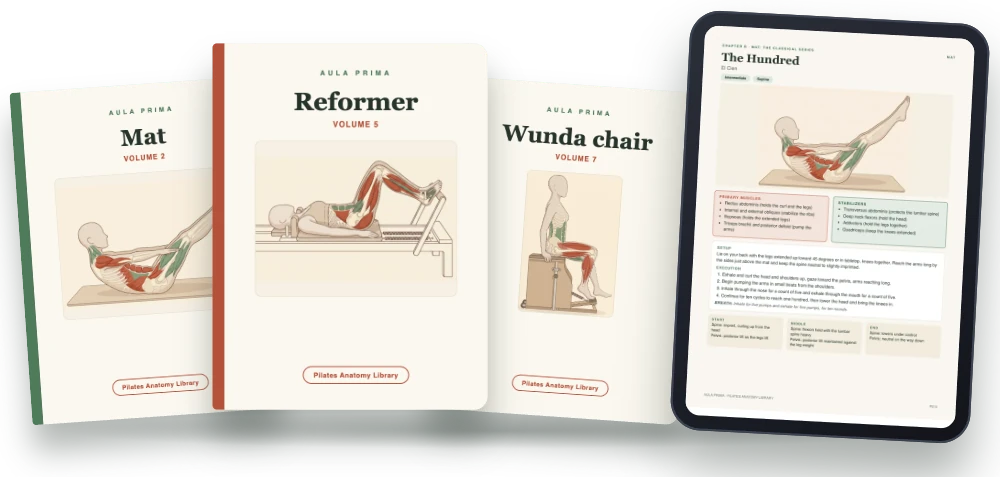
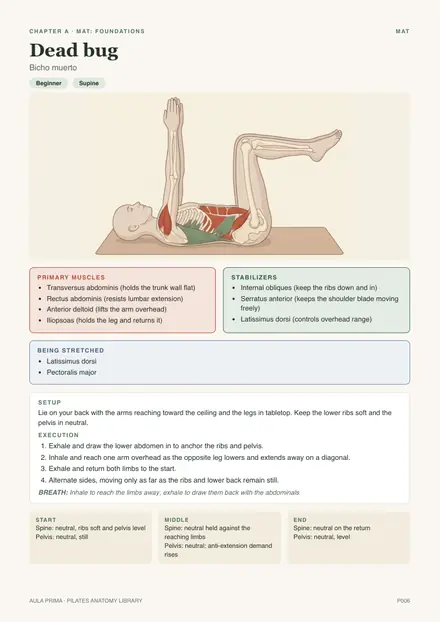
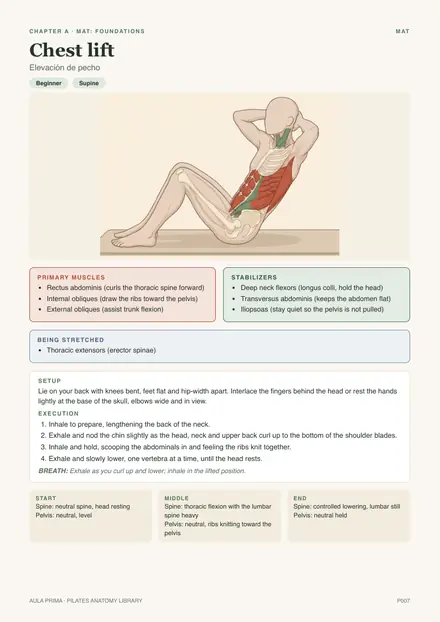
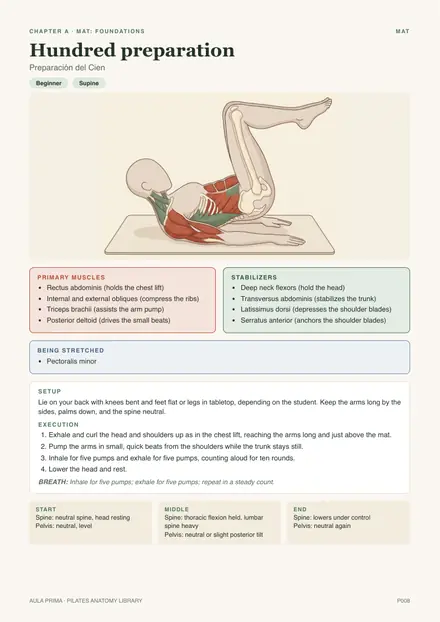
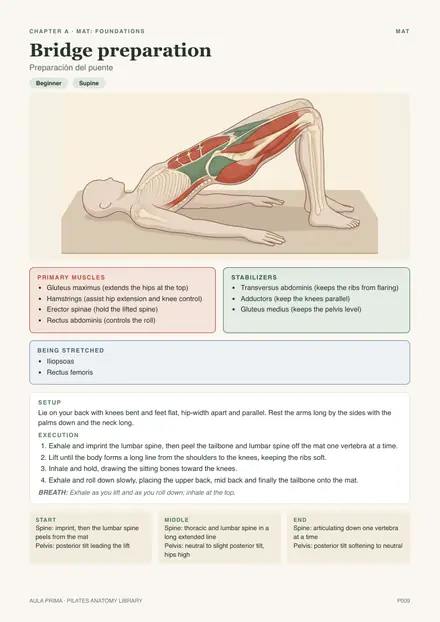
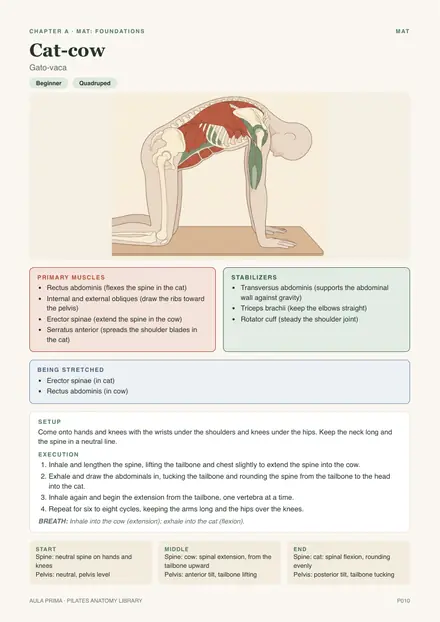
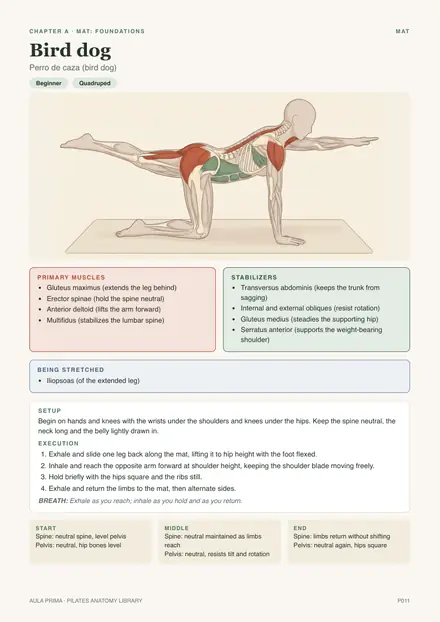
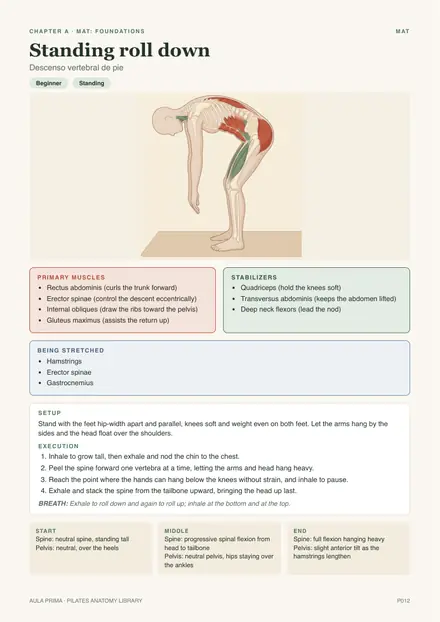
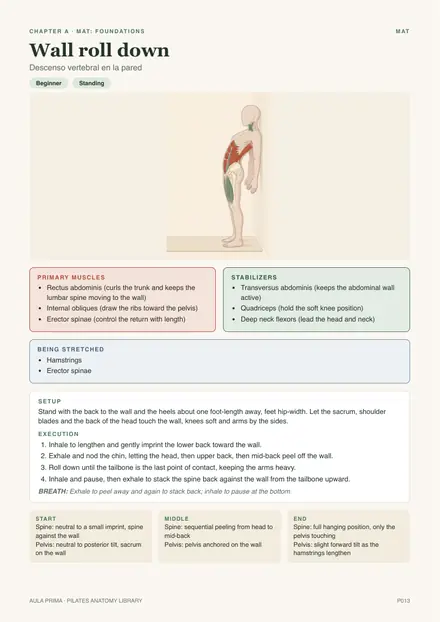
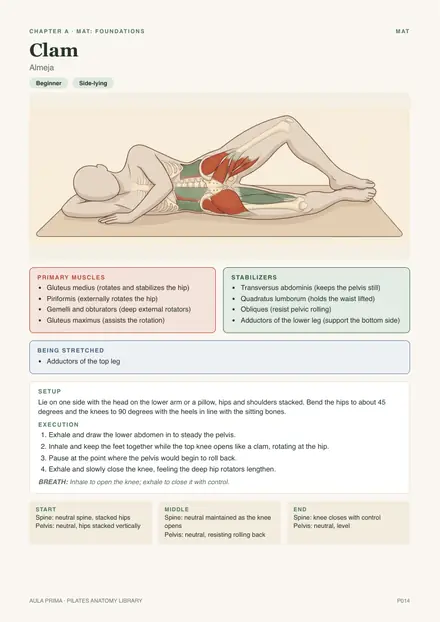
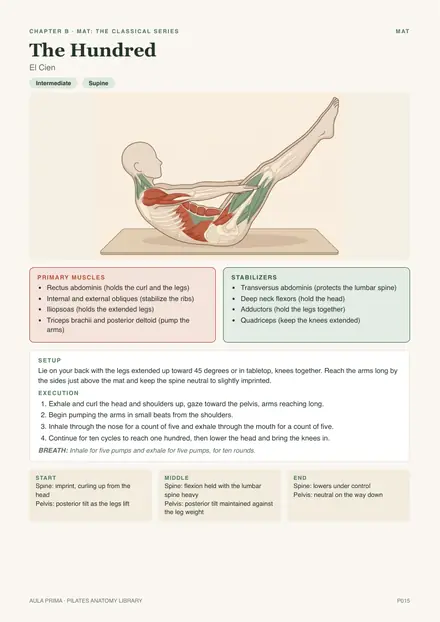
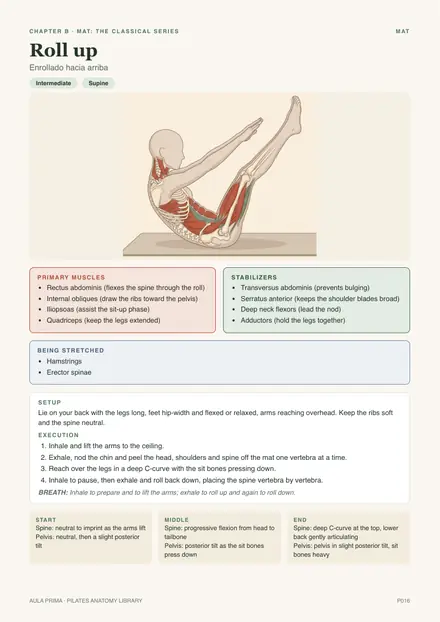
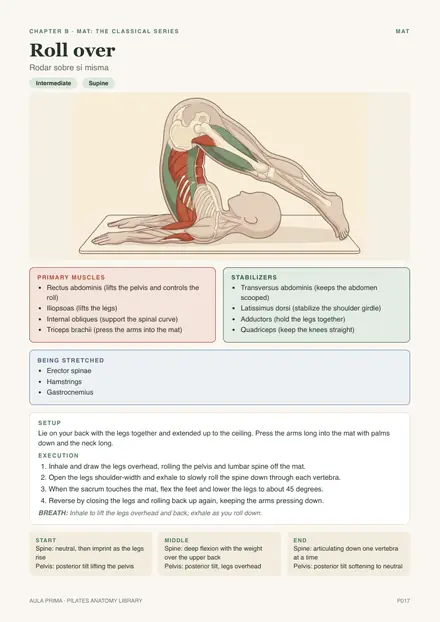
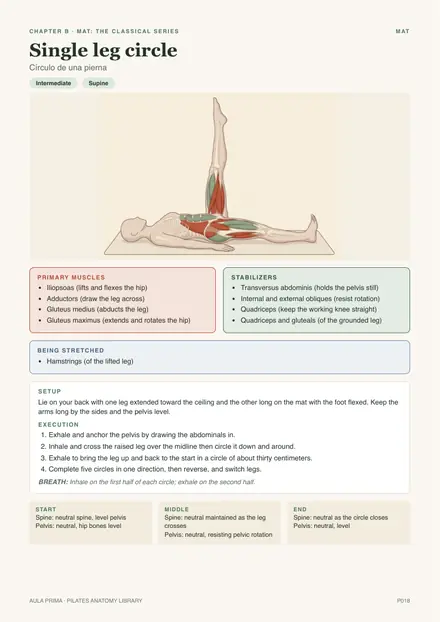
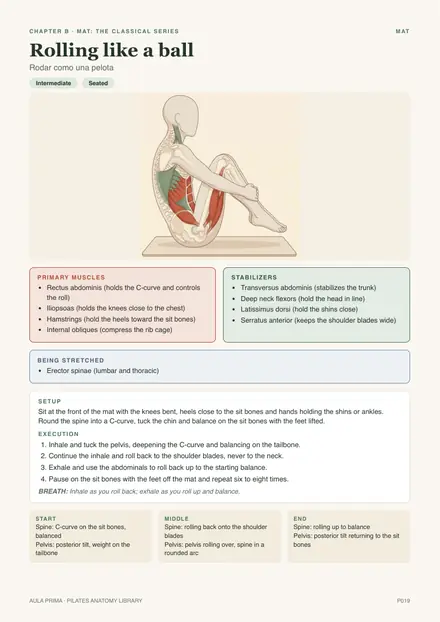
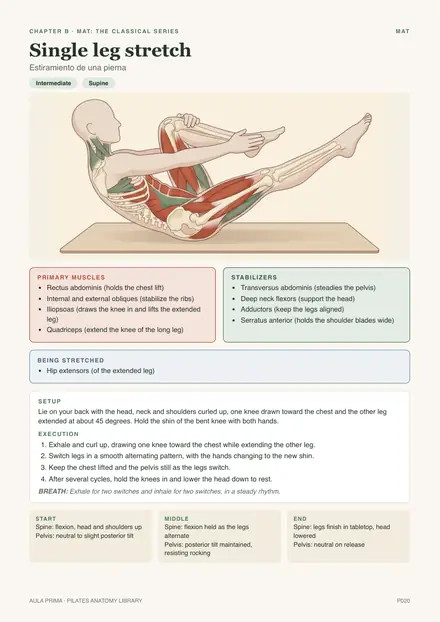
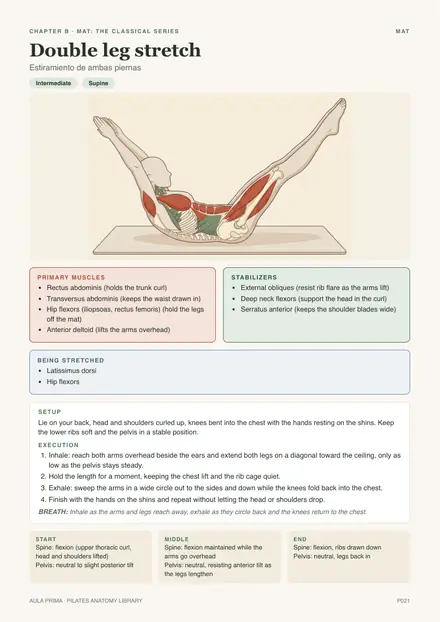
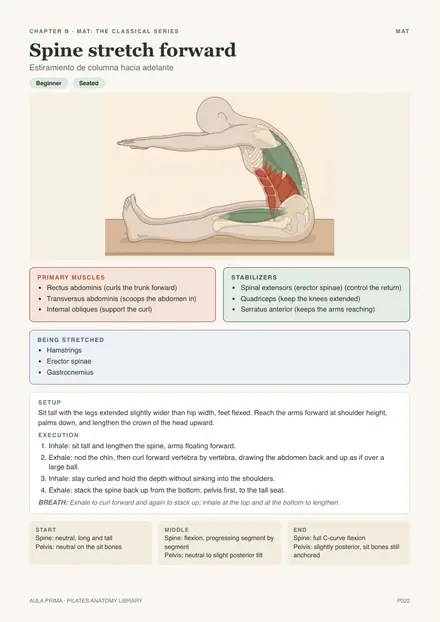
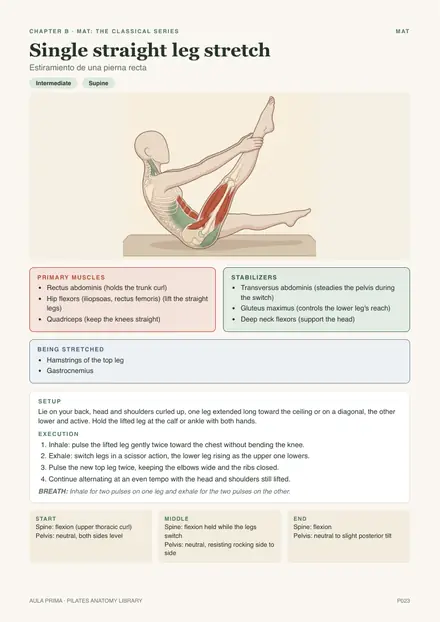
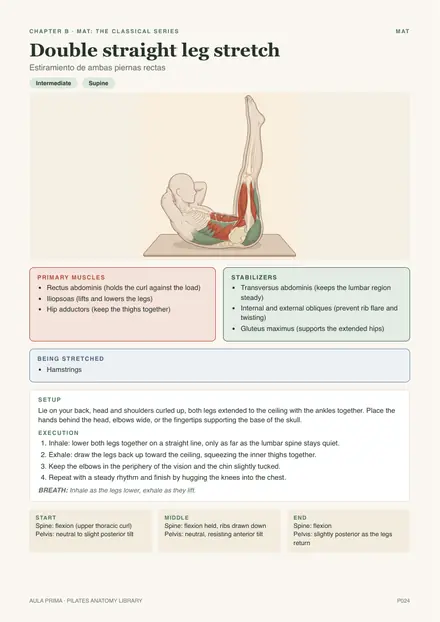
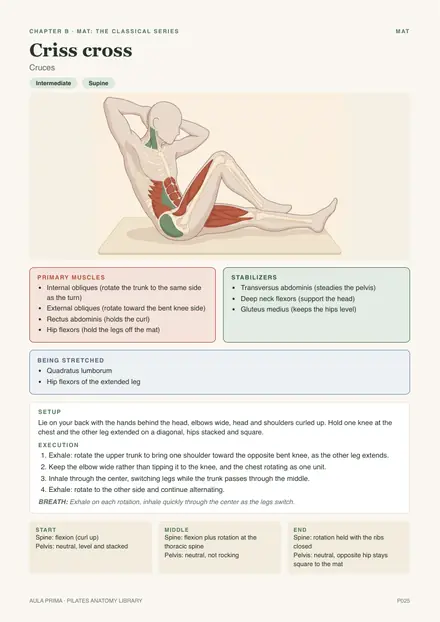
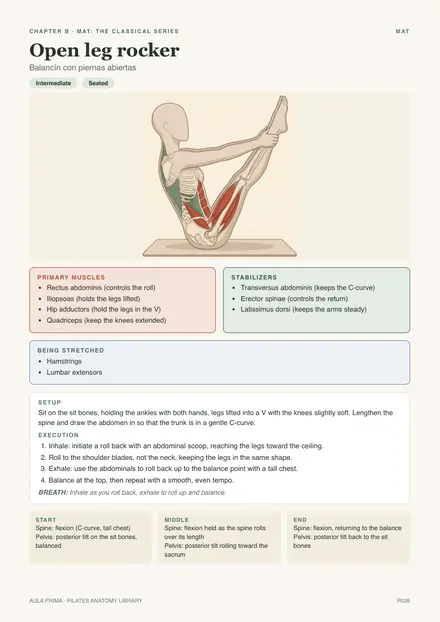
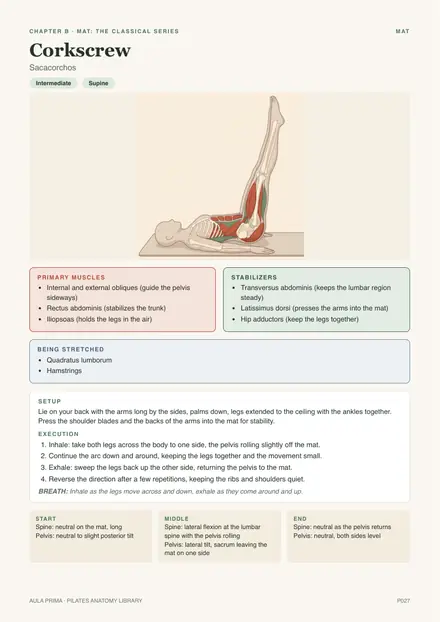
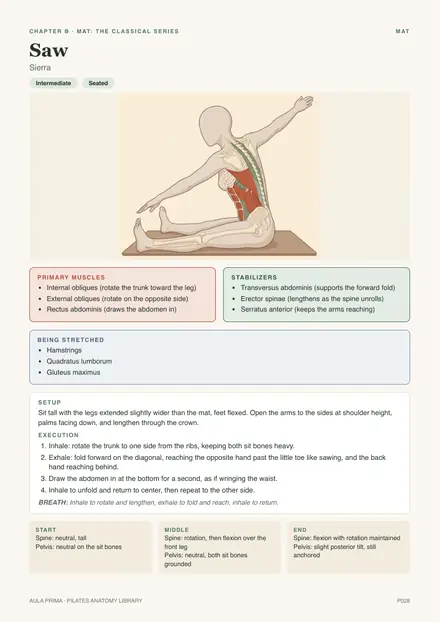
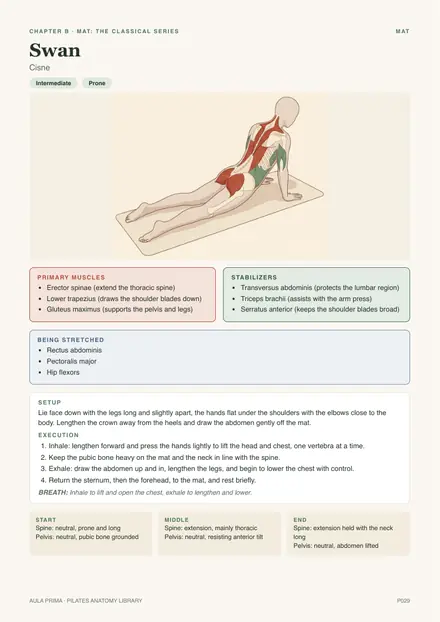
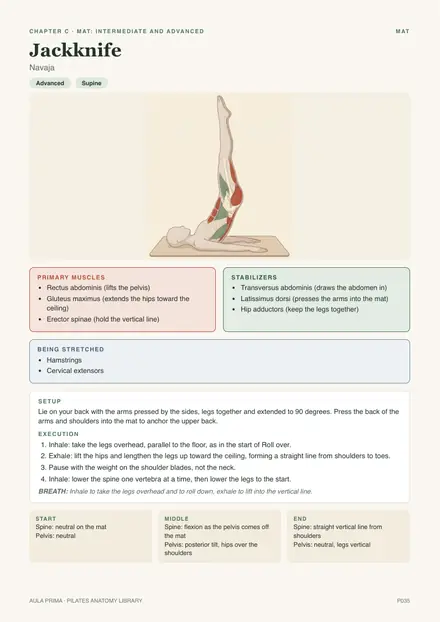
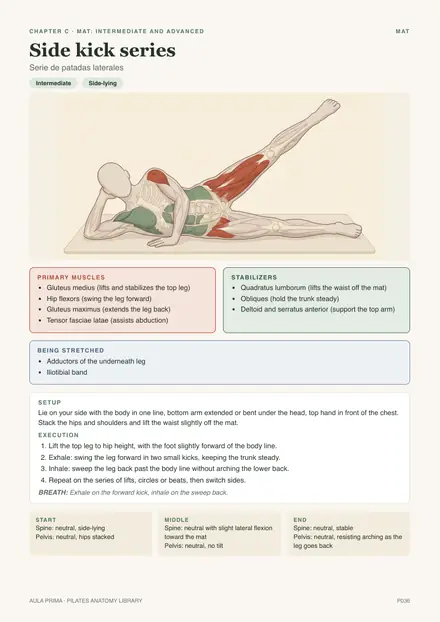
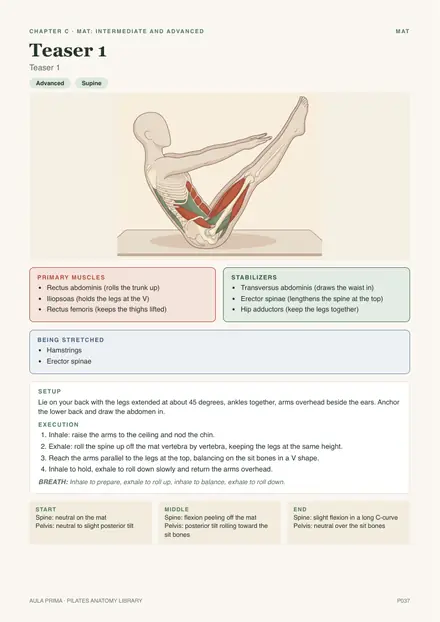
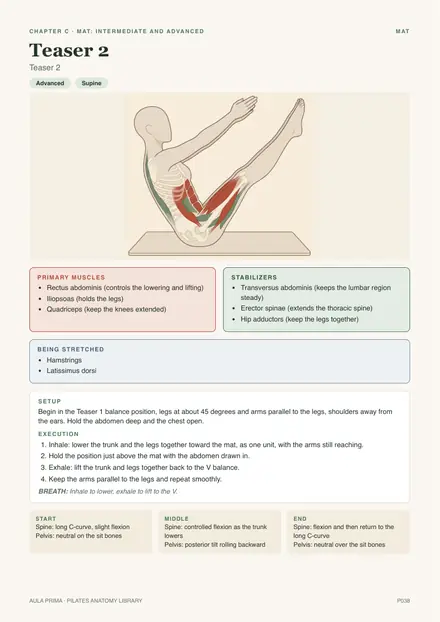
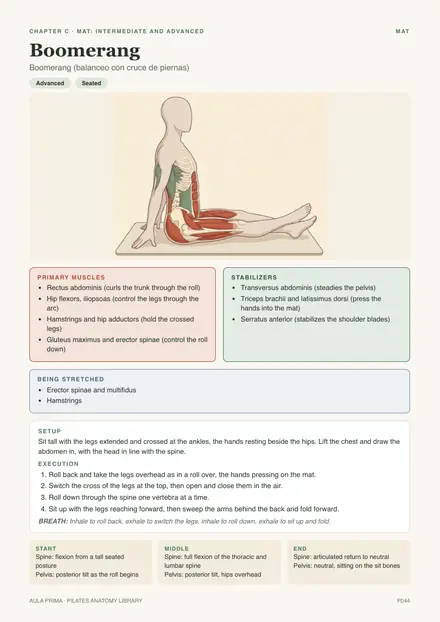
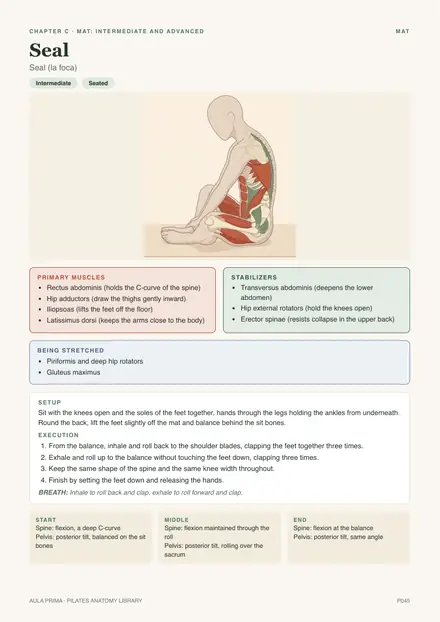
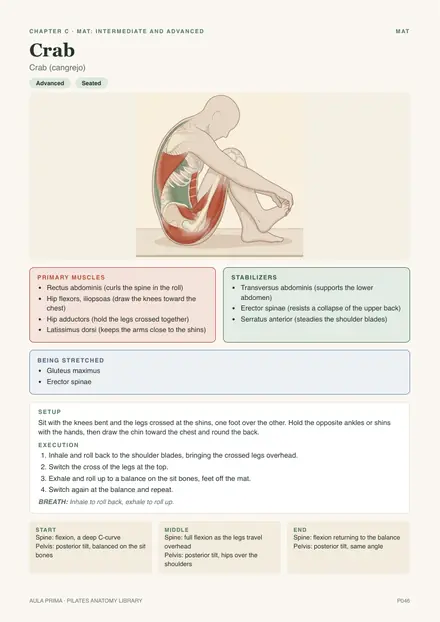
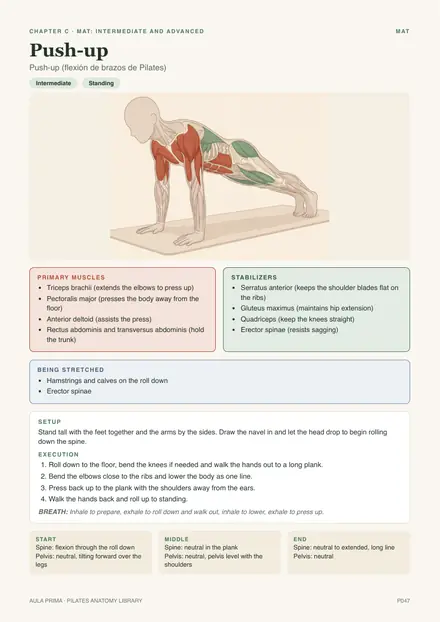
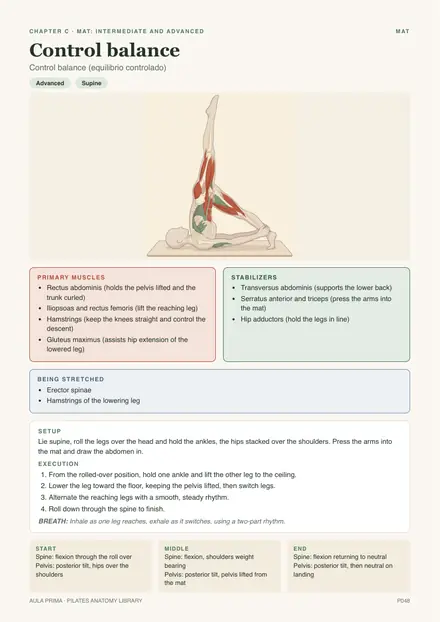
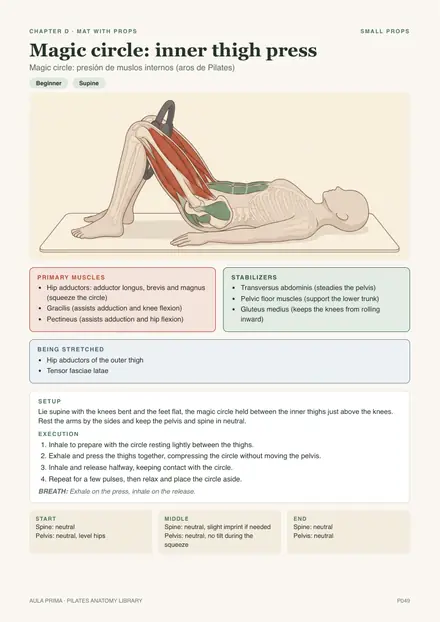
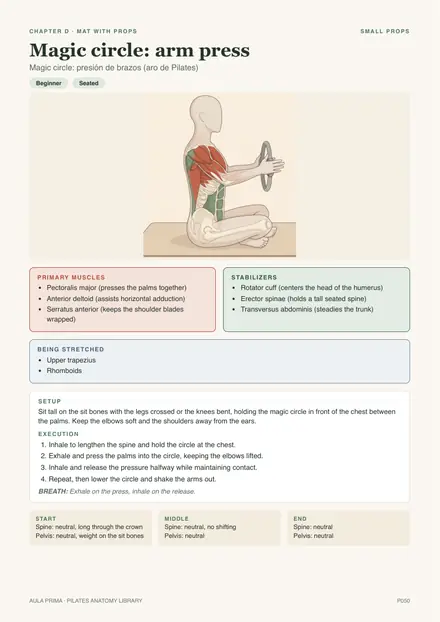
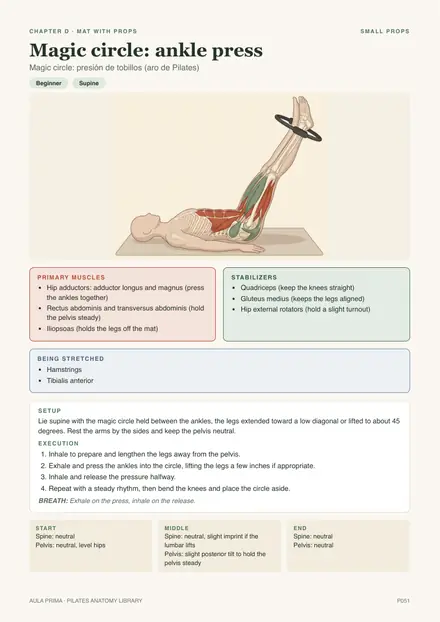
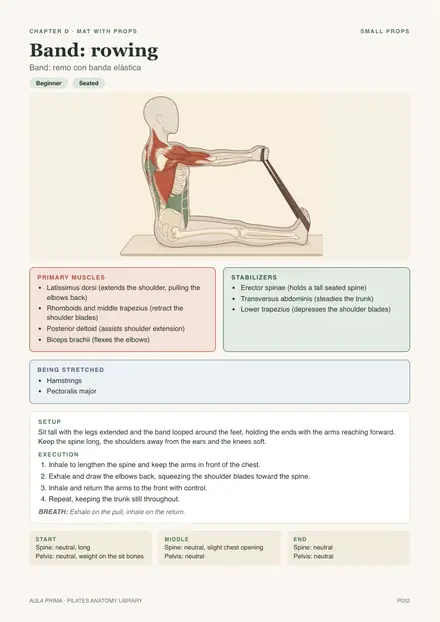
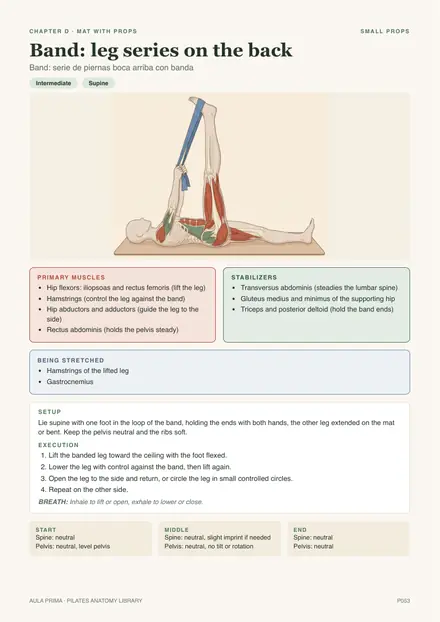
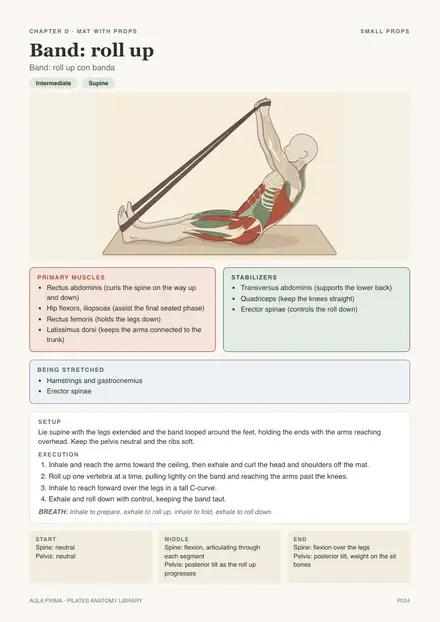
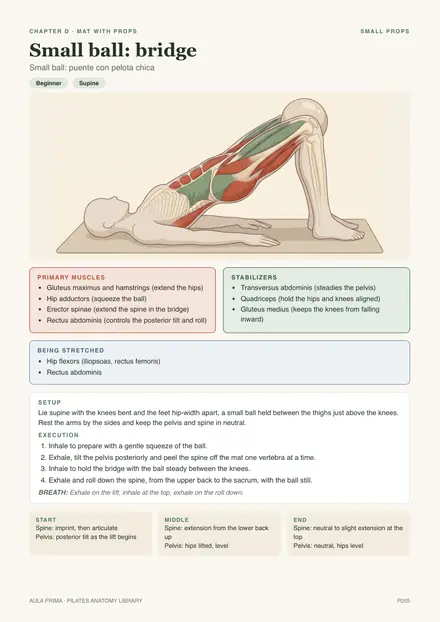
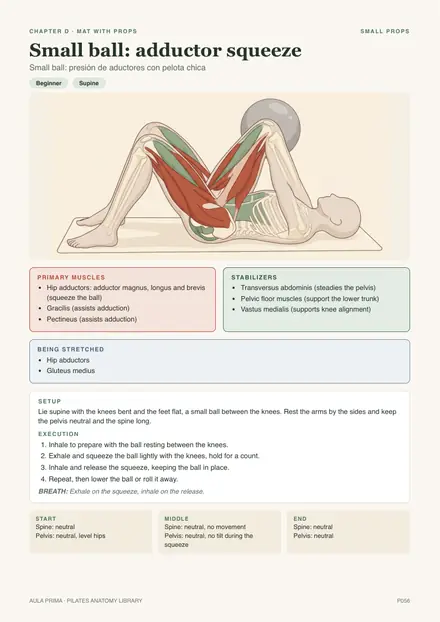
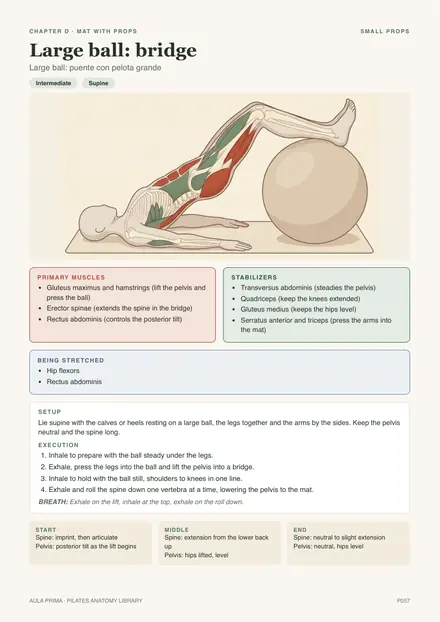
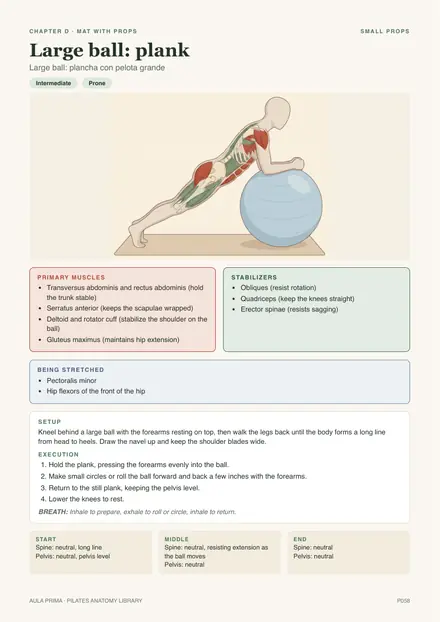
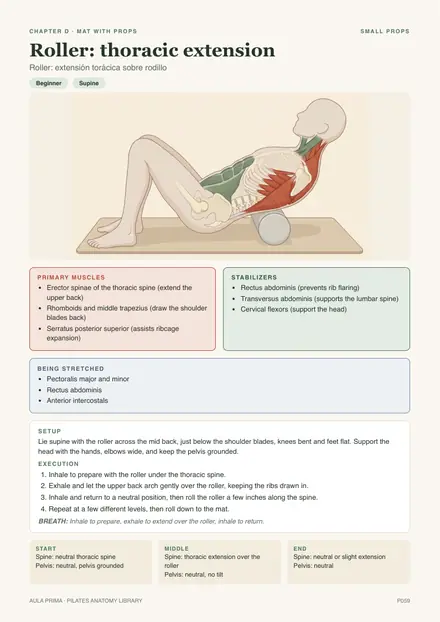
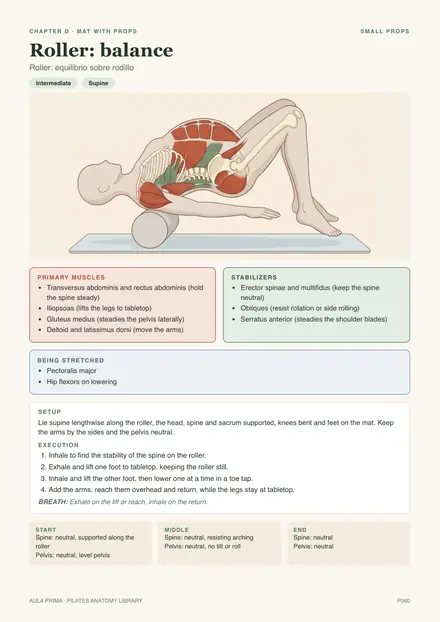
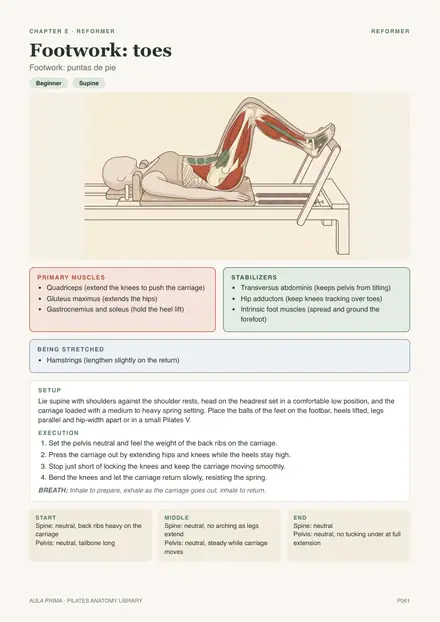
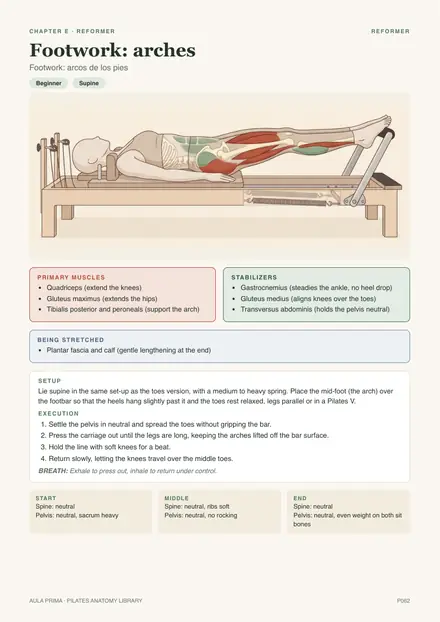
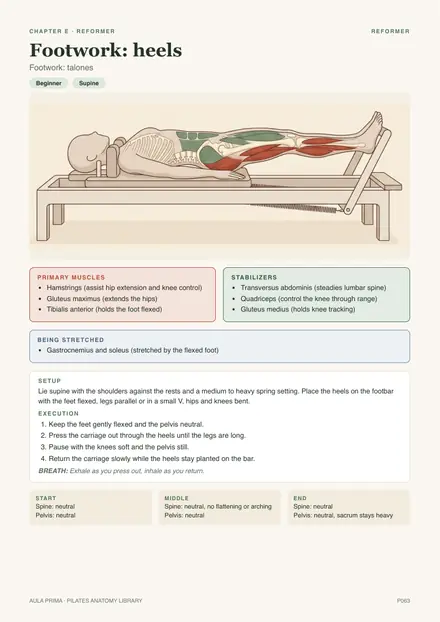
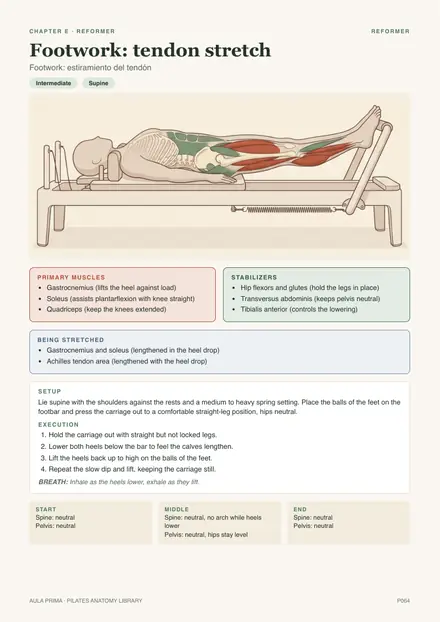
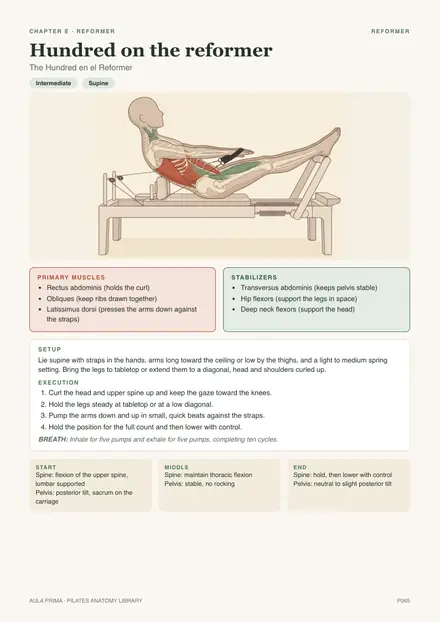
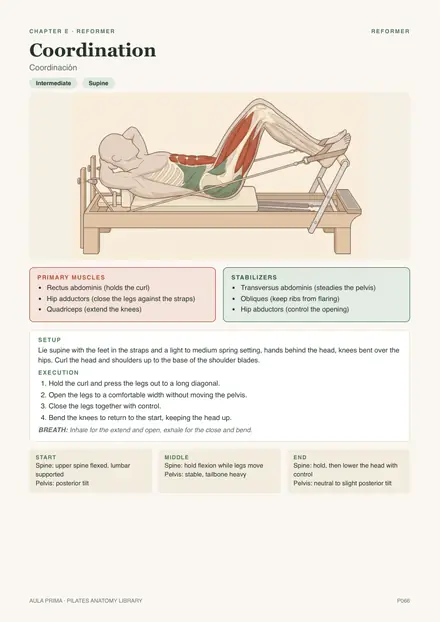
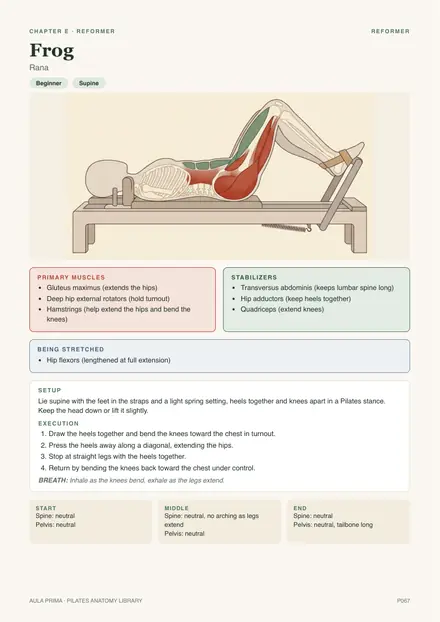
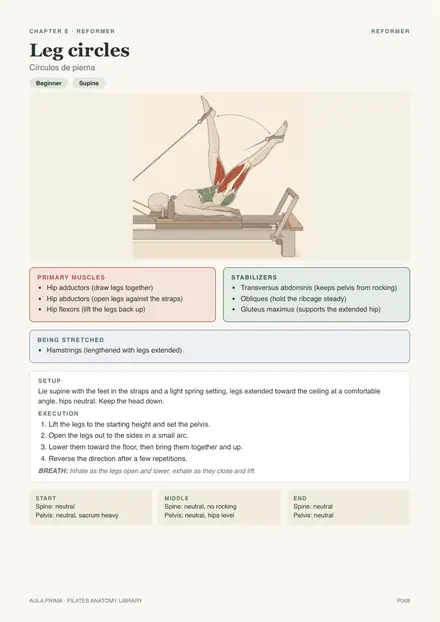
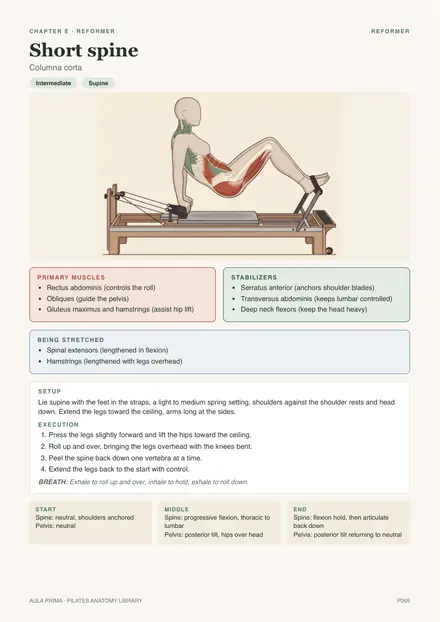
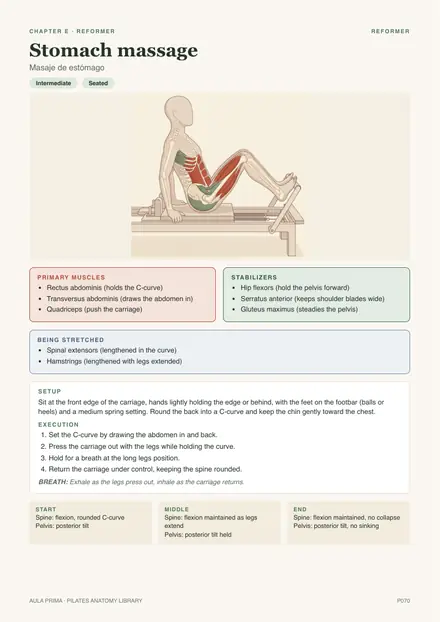
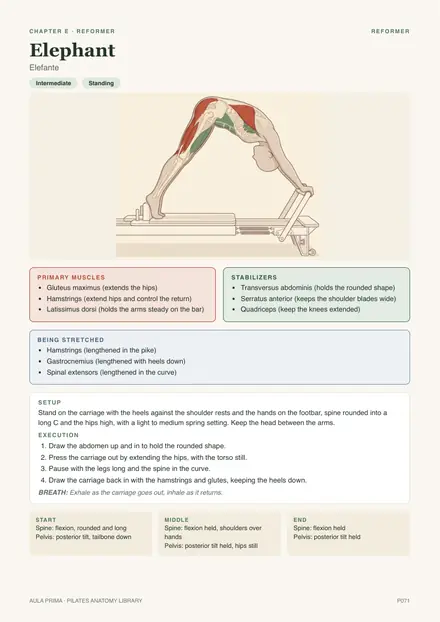
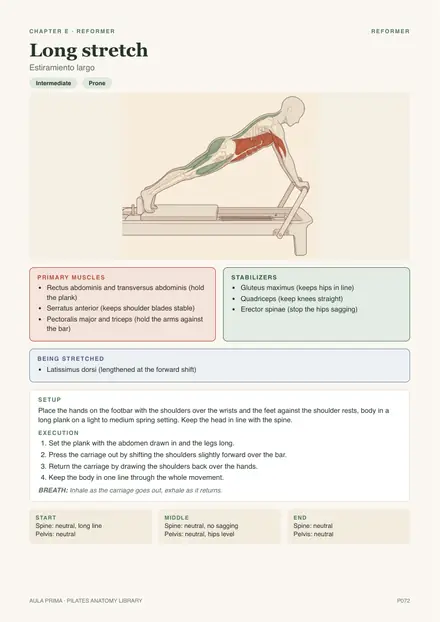
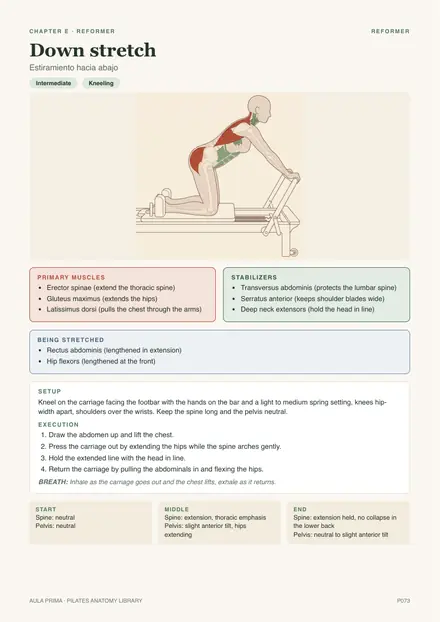
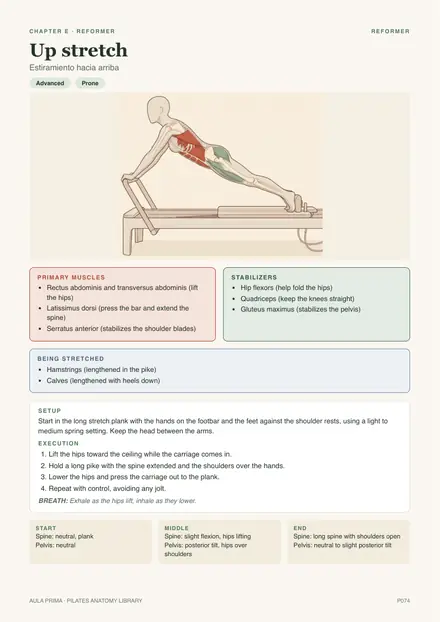
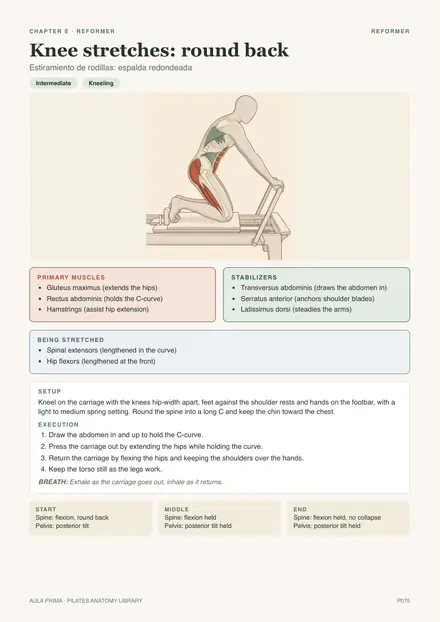
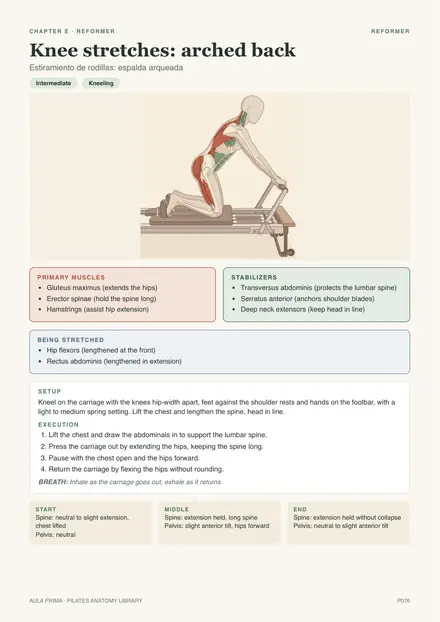
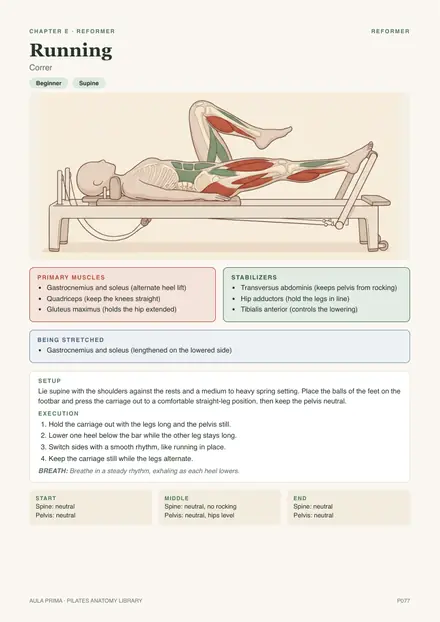
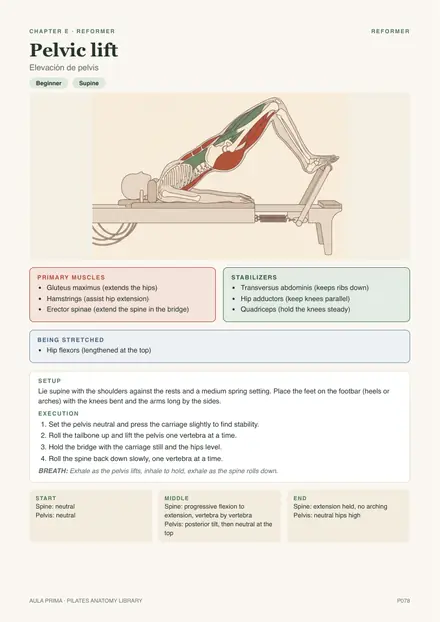
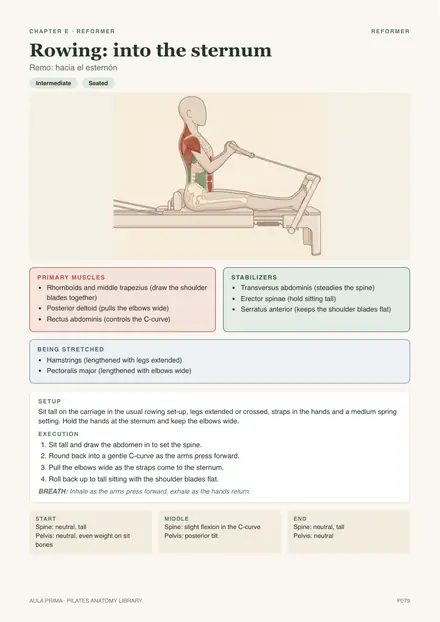
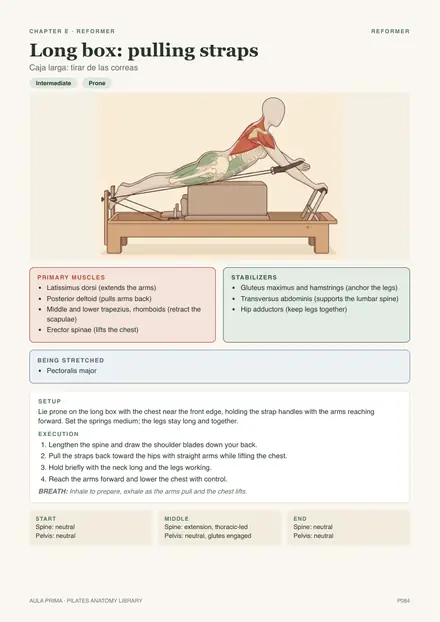
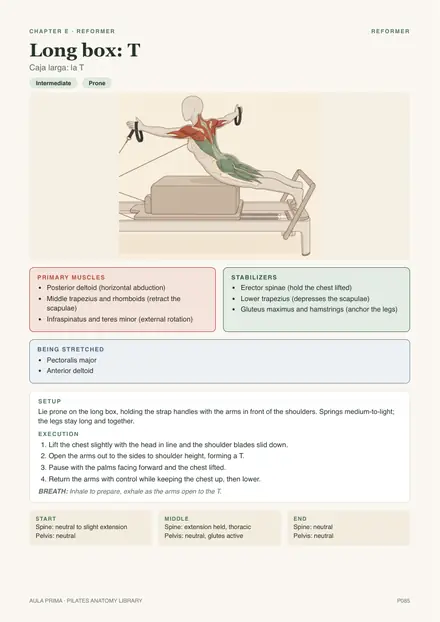
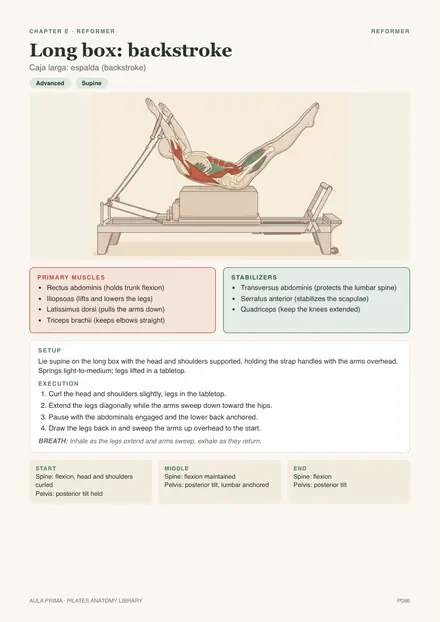
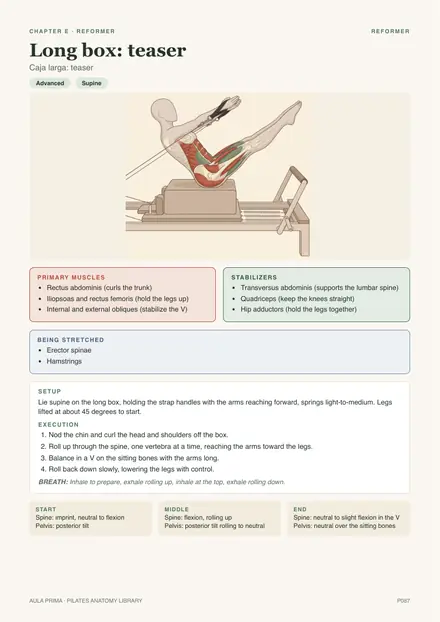
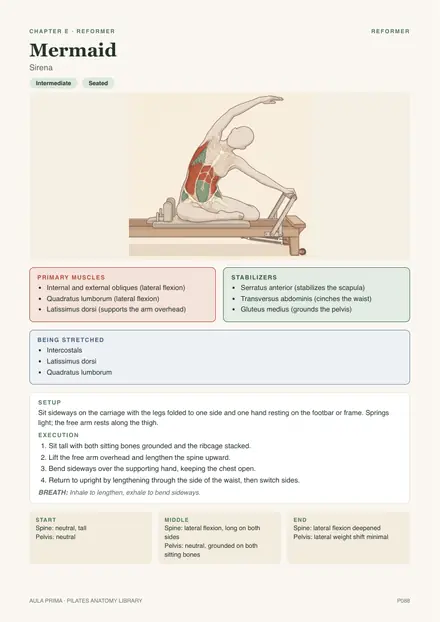
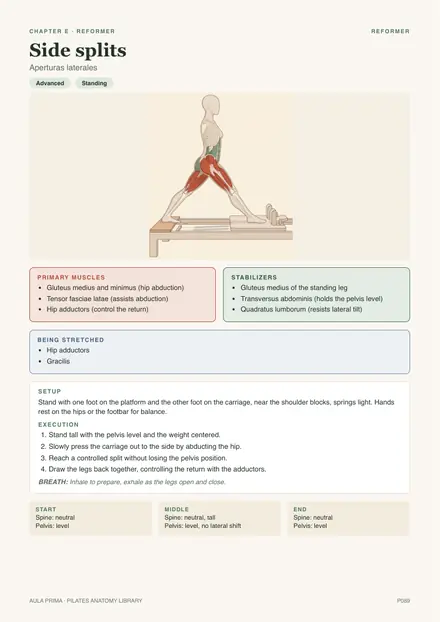
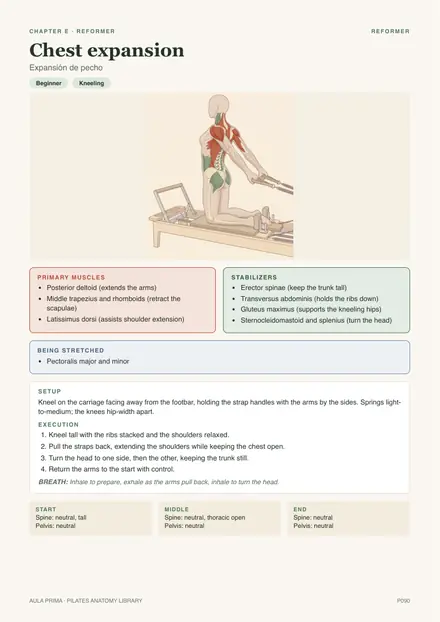
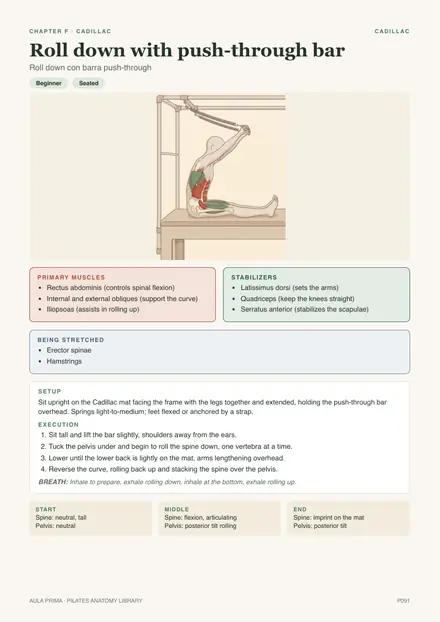
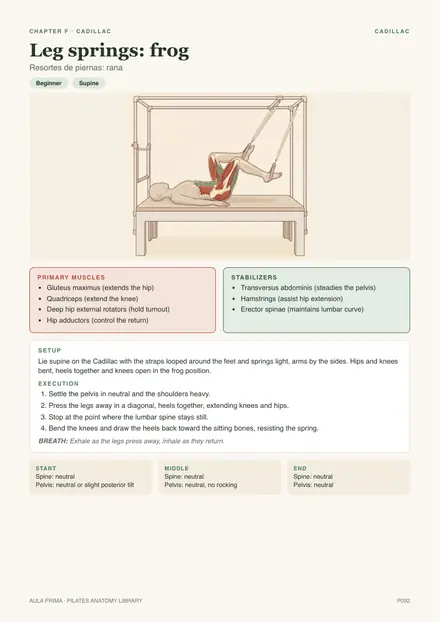
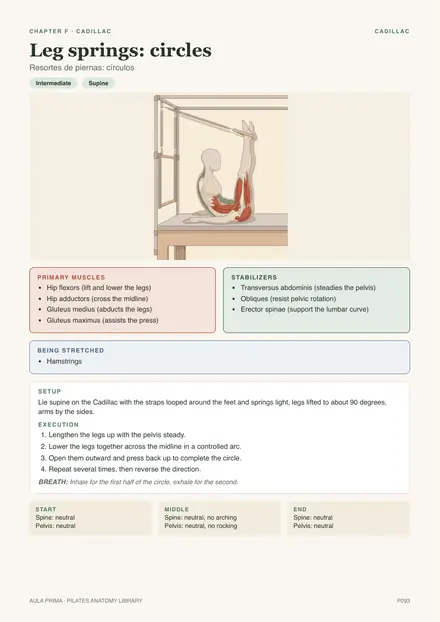
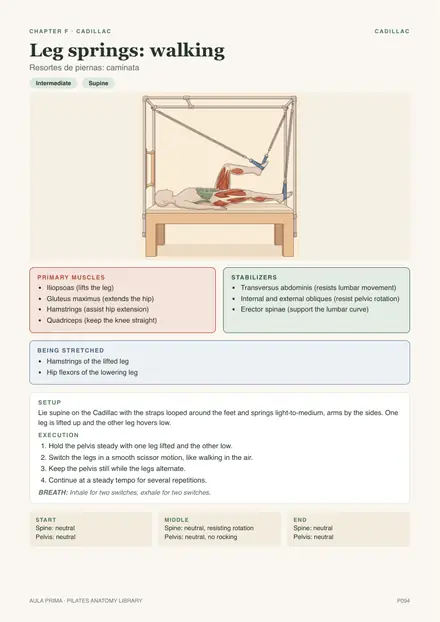
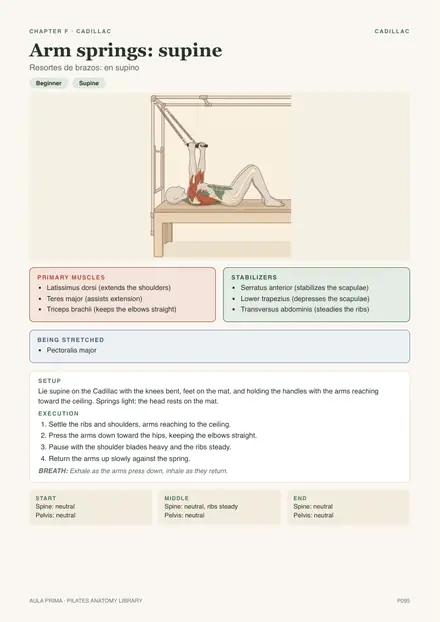
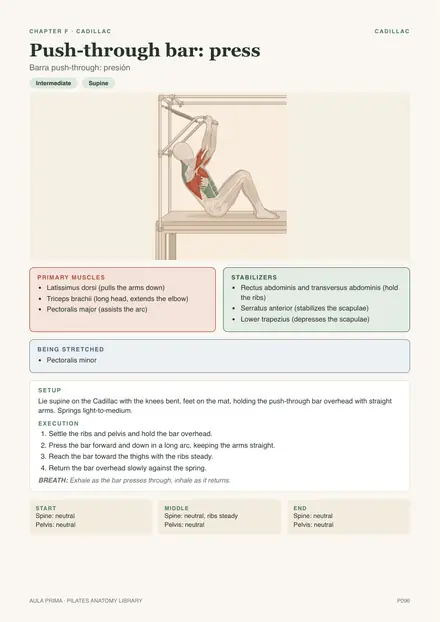
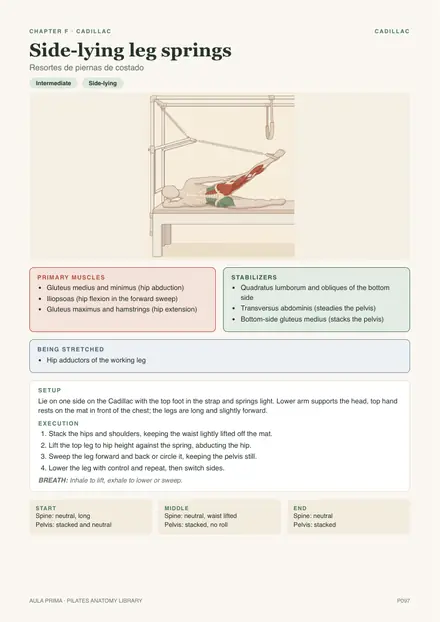
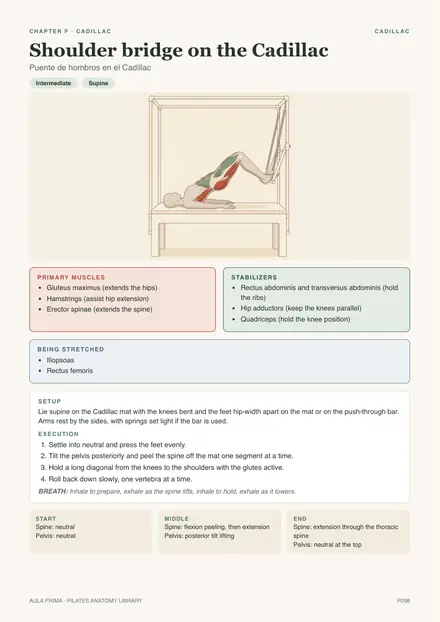
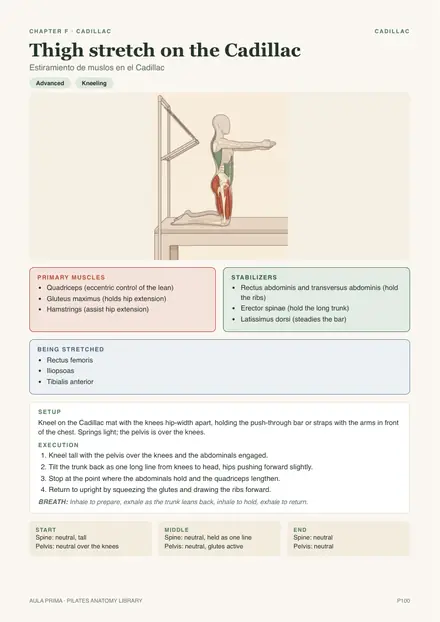
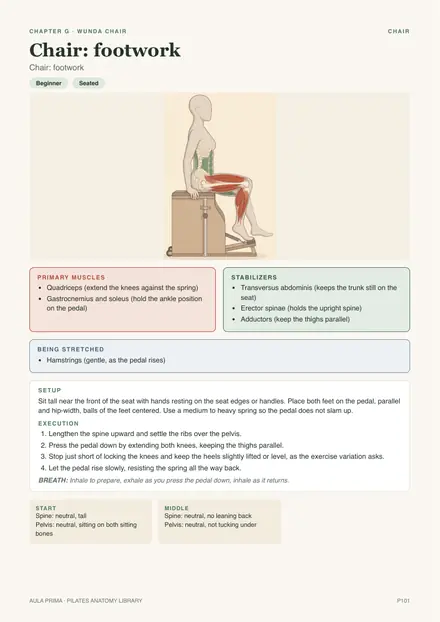
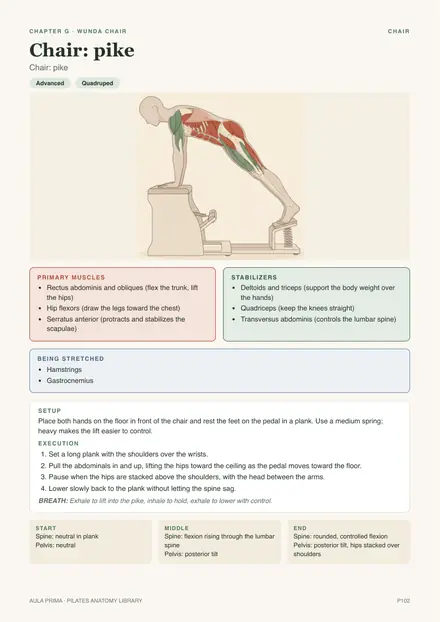
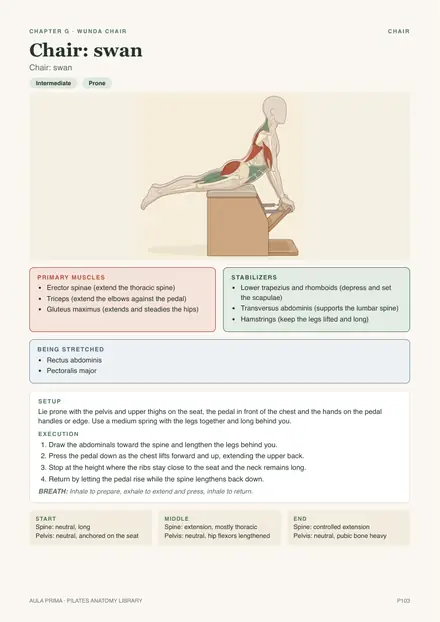
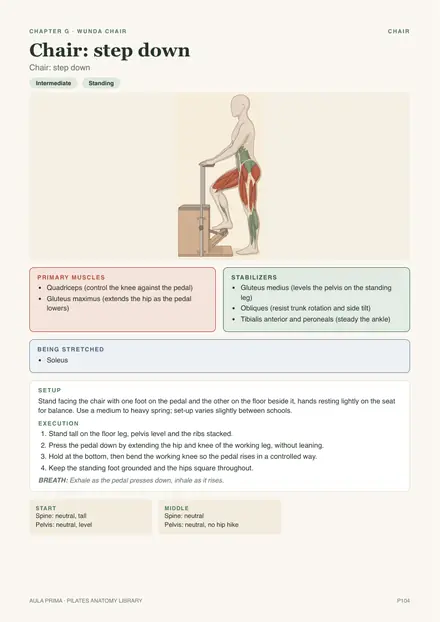
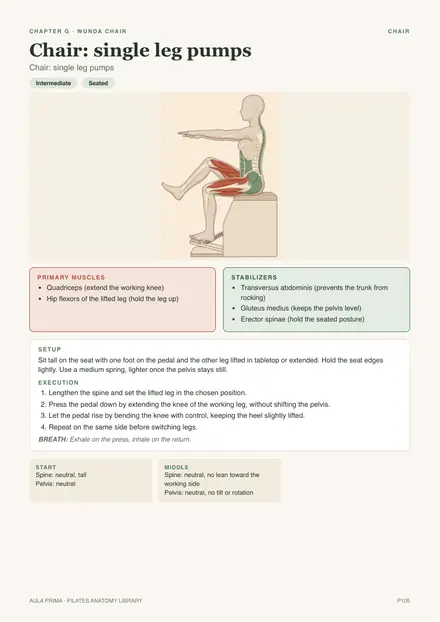
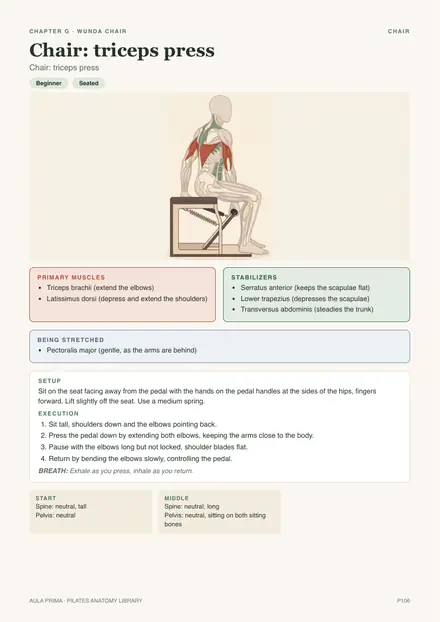
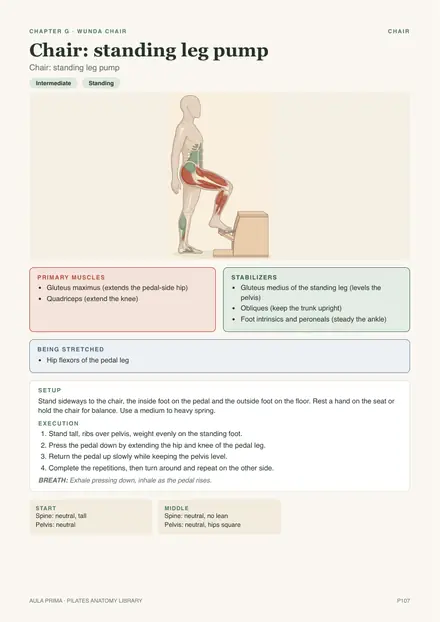
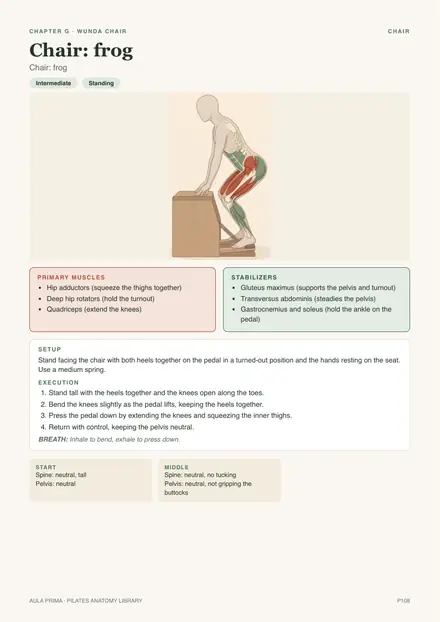
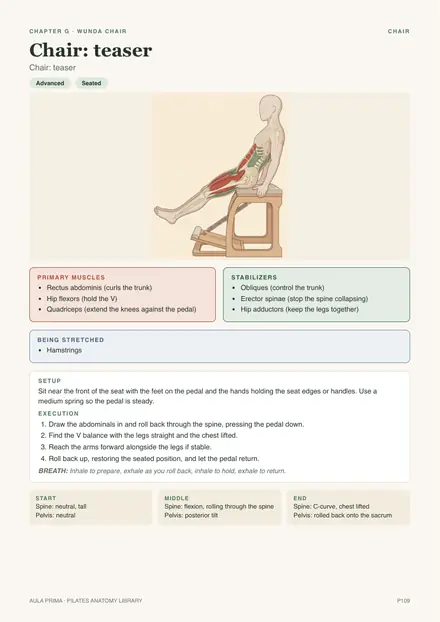
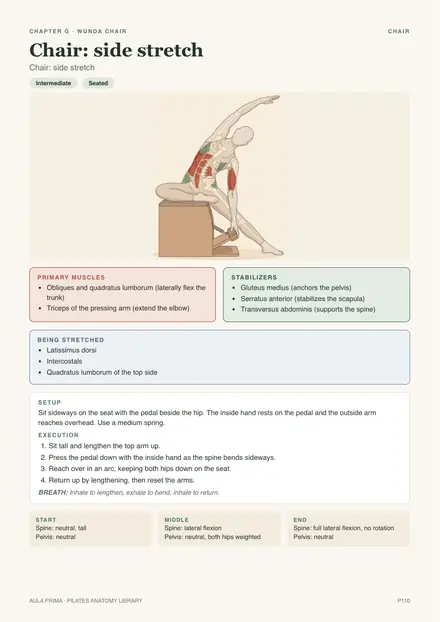
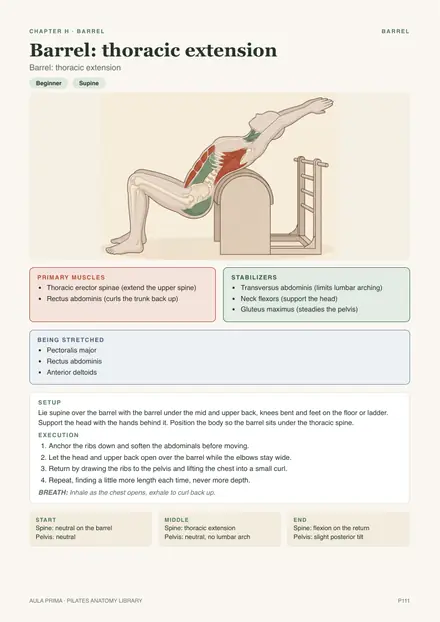
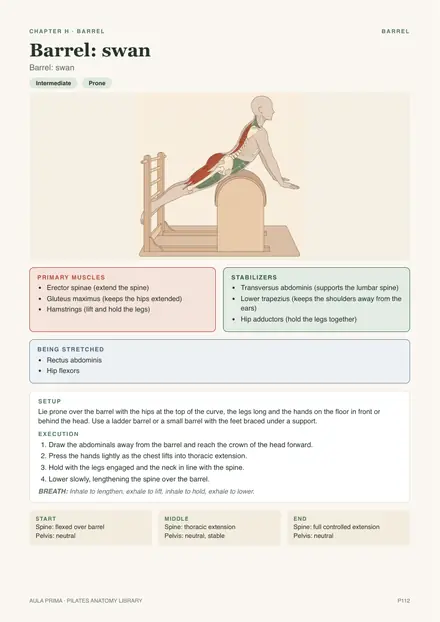
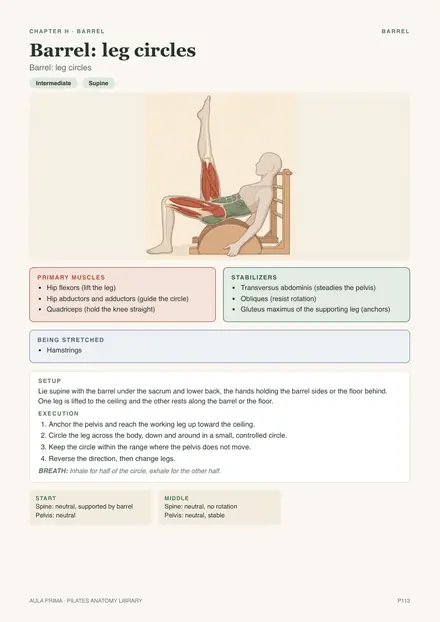
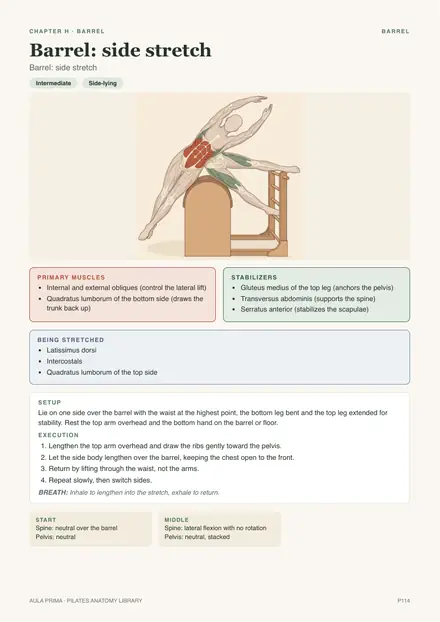
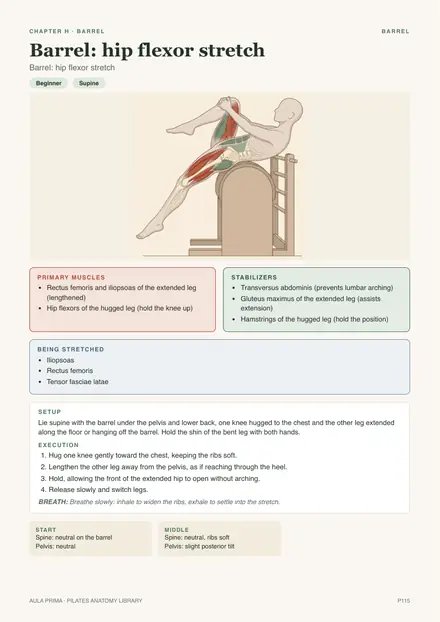
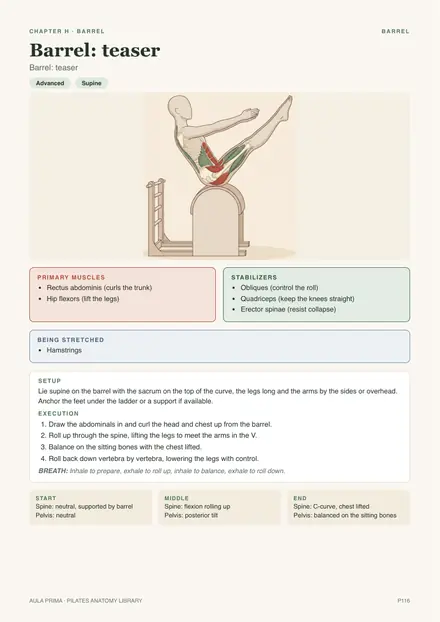
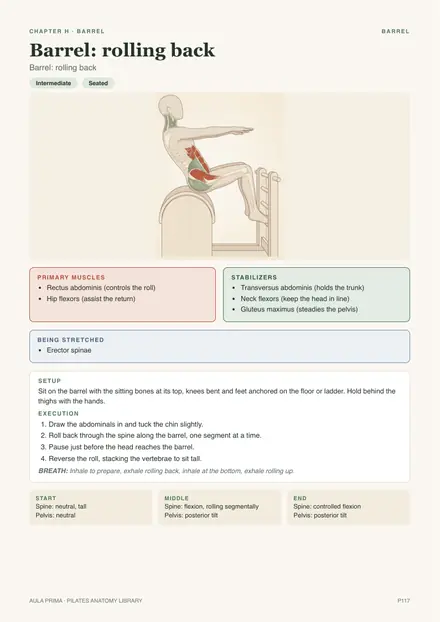
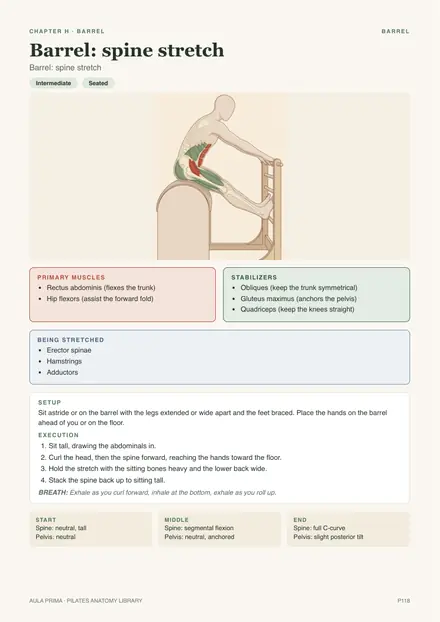
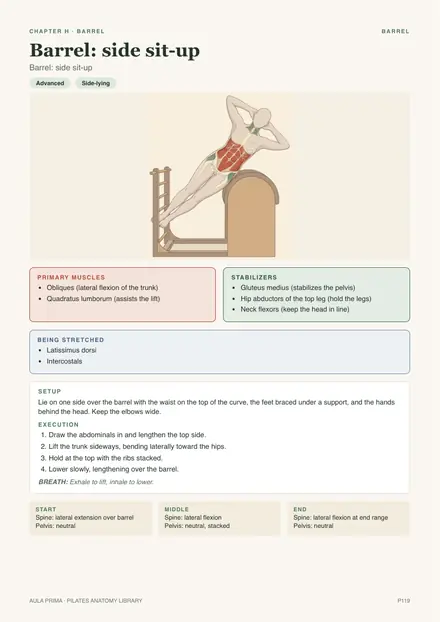
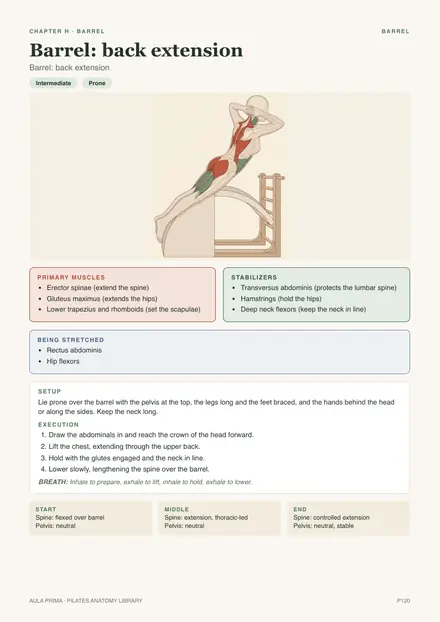
Mat, props, Reformer, Cadillac, Chair and Barrel. Every exercise shows the primary muscles and stabilizers painted on the figure, what the pelvis and spine do phase by phase, the common errors with what to say and how to touch, and ways to make it easier or harder.
7-day guarantee · Secure payment · Instant digital access
One-time payment in USD · Credit and debit cards · Secure checkout
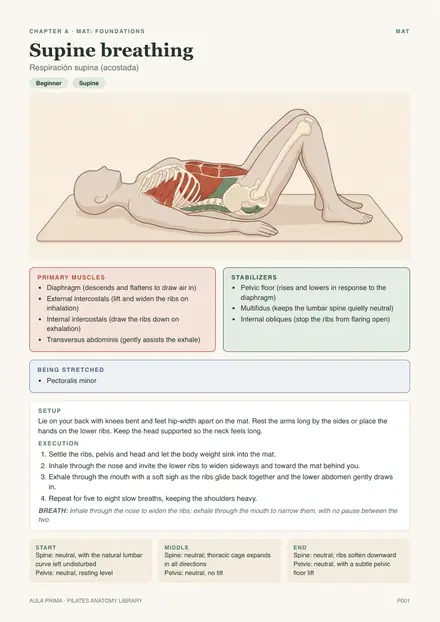
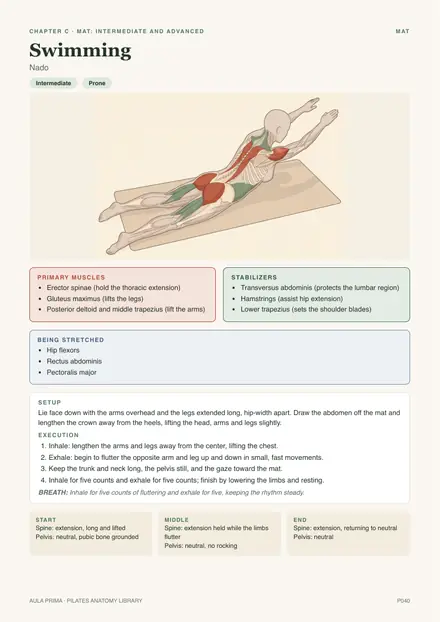
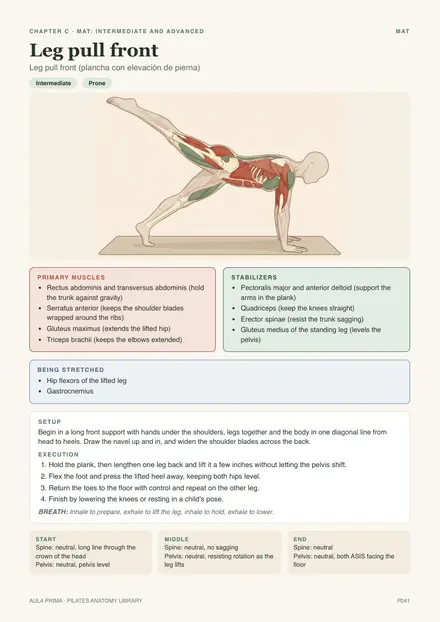
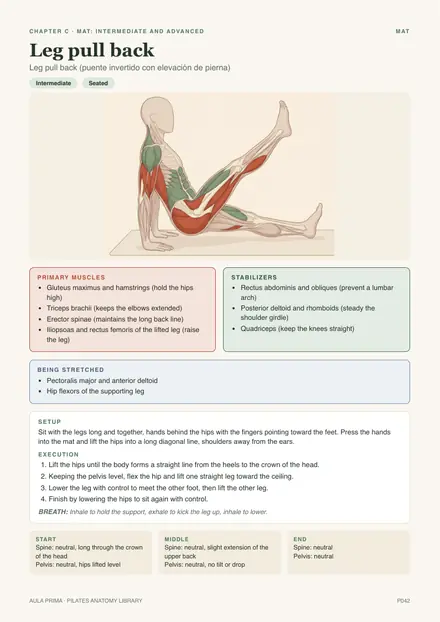
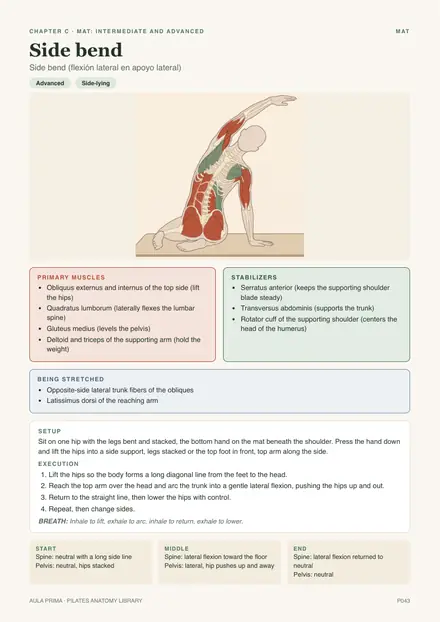
Every exercise page of the book, 120 in total, each with its figure and the muscles painted on it. Swipe to see them all.


“Pull your navel in.” “Engage your center.” You say it because that is how you learned it, but if someone asks which muscle you are calling on, the answer falls short.
A new person walks in with their own particularities and you do not have clear what to consider, what to simplify or what to avoid asking of them.
You build the class by habit and intuition. When someone asks why that exercise, or why in that order, it is hard to answer with confidence.
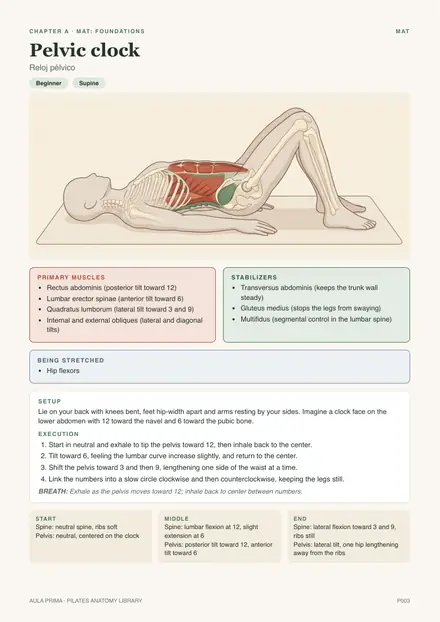
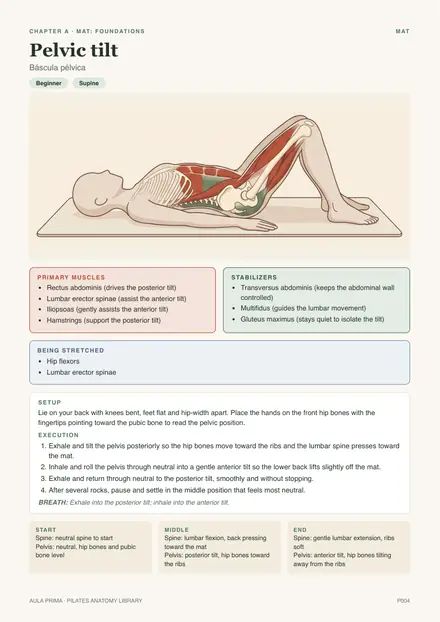
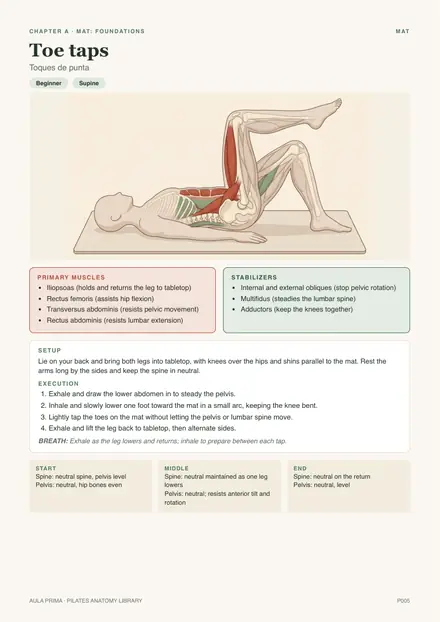
120 exercises, every one built on the same page structure, so you know where to look.
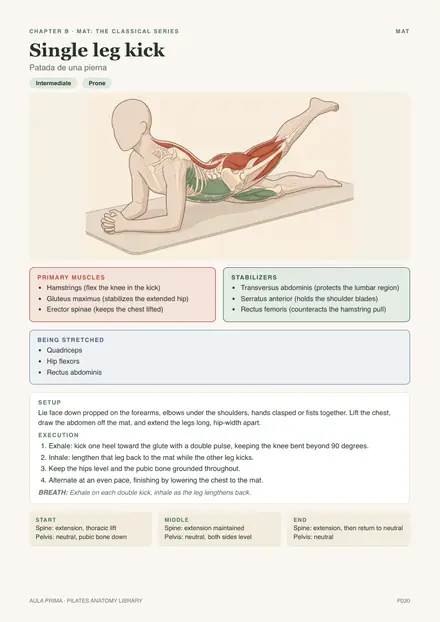
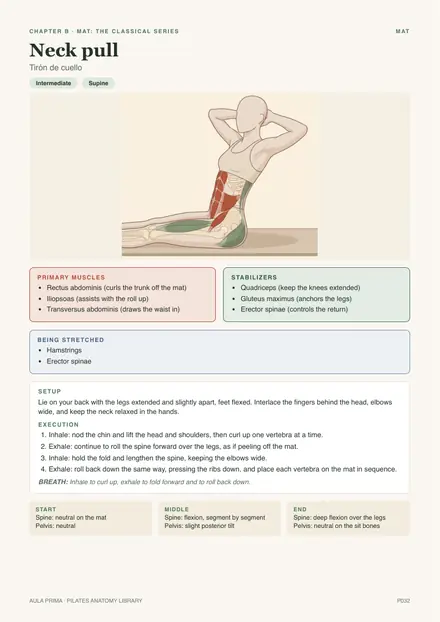
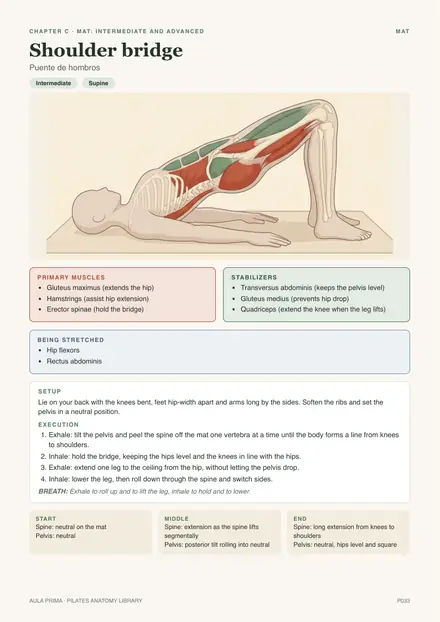
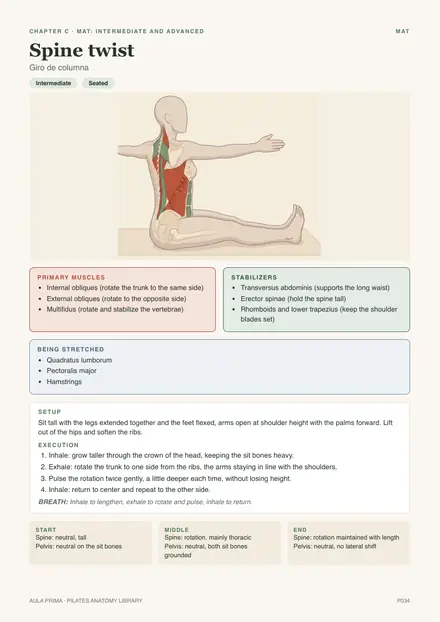
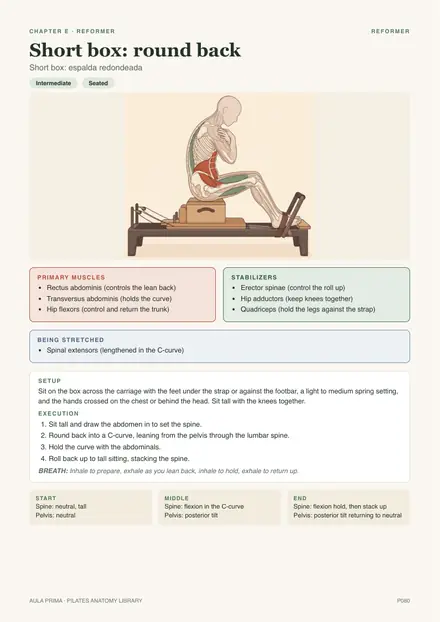
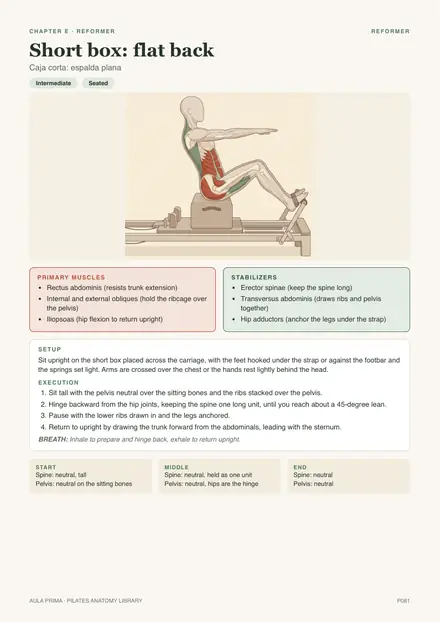
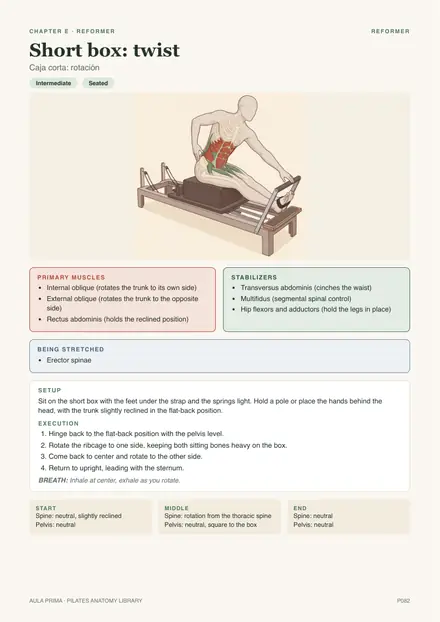
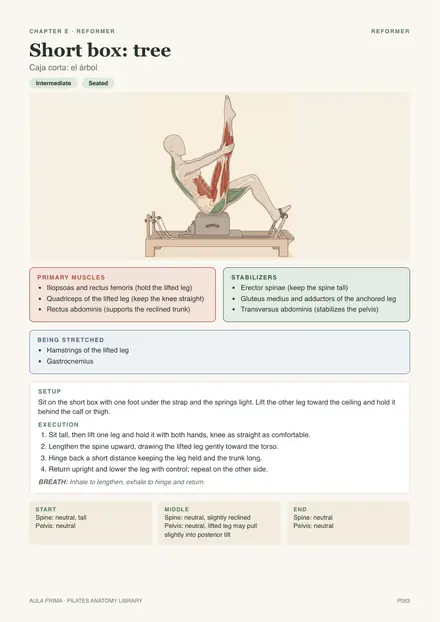
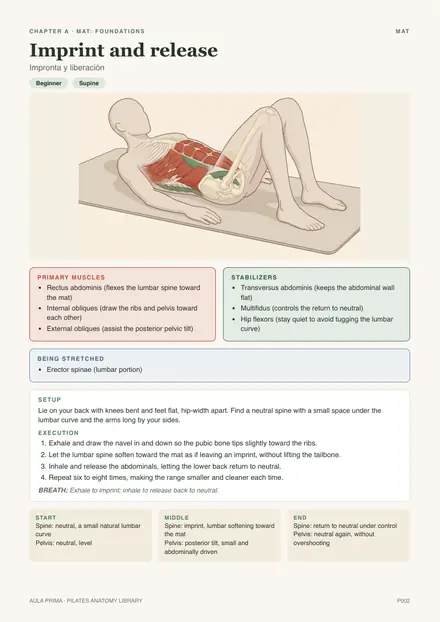
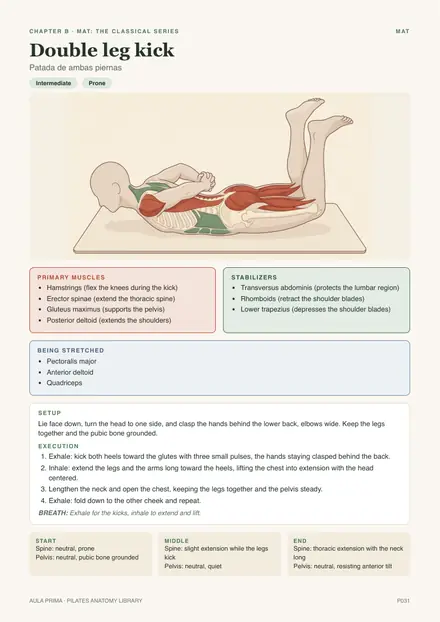
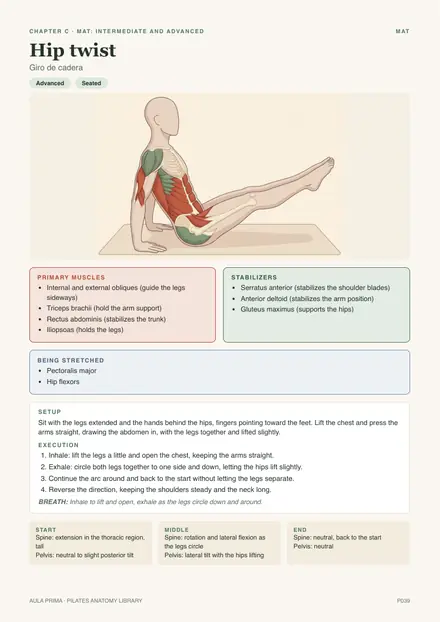
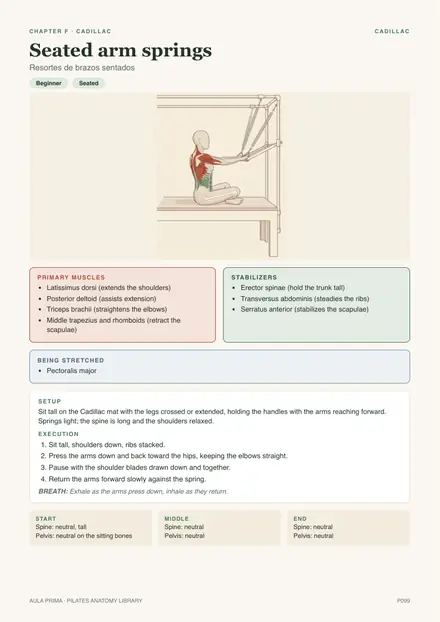
Primary muscles in terracotta, stabilizers in sage and the ones being stretched marked apart. You see the anatomy on the exercise itself.
Start, middle and end: what the spine does and what the pelvis does in each phase, so you know what you are really watching.
What is happening, what to say and how to touch. Written as sentences you can use in the room, not as theory.
General teaching considerations, a way to make it easier and a way to make it harder, plus a note for the teacher.
8 volumes by apparatus, plus the Atlas and the Class Design. Tap a chapter to see its exercises.
Origin, insertion, action and what each muscle does in Pilates, with a cue for each one.
Transversus abdominis · Multifidus · Diaphragm · Pelvic floor (levator ani and coccygeus) · Rectus abdominis · Internal oblique · External oblique · Erector spinae (iliocostalis, longissimus, spinalis) · Quadratus lumborum · Psoas major and iliacus (iliopsoas) · Gluteus maximus · Gluteus medius · Deep hip rotators (piriformis, obturators, gemelli, quadratus femoris) · Hamstrings (biceps femoris, semitendinosus, semimembranosus) · Adductors (magnus, longus, brevis, gracilis, pectineus) · Quadriceps (rectus femoris and vasti) · Pectoralis major · Serratus anterior · Trapezius (upper, middle, lower) · Rhomboids (major and minor) · Latissimus dorsi · Rotator cuff (supraspinatus, infraspinatus, teres minor, subscapularis) · Deltoids (anterior, middle, posterior) · Biceps brachii · Triceps brachii · Neck flexors (deep cervical flexors, sternocleidomastoid, scalenes) · Tibialis anterior · Gastrocnemius and soleus
Structure, 50-minute class templates, progressions and cueing, and how teaching one student differs from teaching a group.
4 free bonuses for the students who will walk into your class and for your work as a teacher. Each one is yours today at no cost.
BONUS 1 · FREEHow to adapt the library for pregnant and postpartum students, trimester by trimester: what to keep, modify or skip, 14 adapted exercises and 2 ready-made classes. 11 pages.
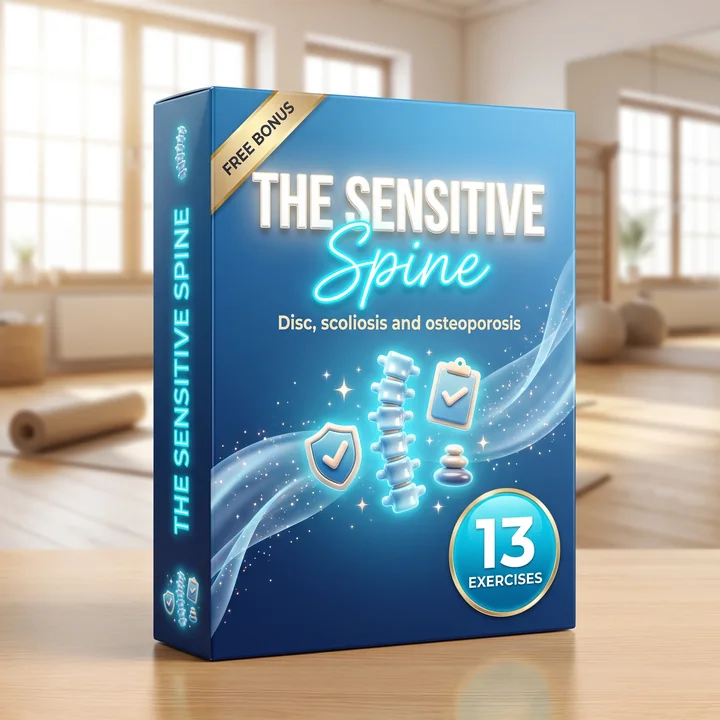
BONUS 2 · FREEDisc herniation, scoliosis and osteoporosis seen from the teacher's side: how to read the student, what to ask, 13 exercises with adaptations and 2 ready-made classes. 10 pages.
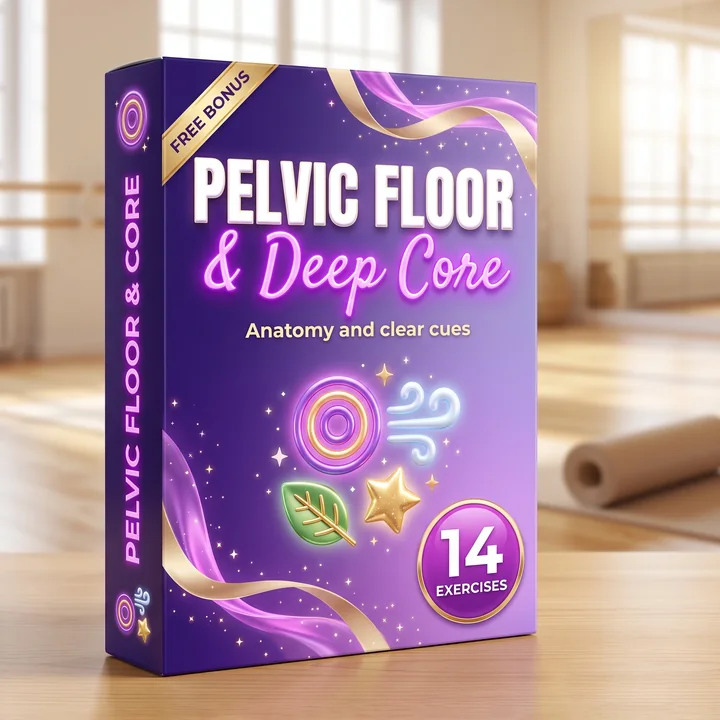
BONUS 3 · FREEThe anatomy of the deep core, how to cue it without vague gestures, a breath + transversus + pelvic floor sequence and 14 progressive exercises. 9 pages.
BONUS 4 · FREEIntake form with red flags, 5-minute postural observation, class plan and student record, class policies, pricing sheet and a first-class script. Templates, ready to fill in. 15 pages.
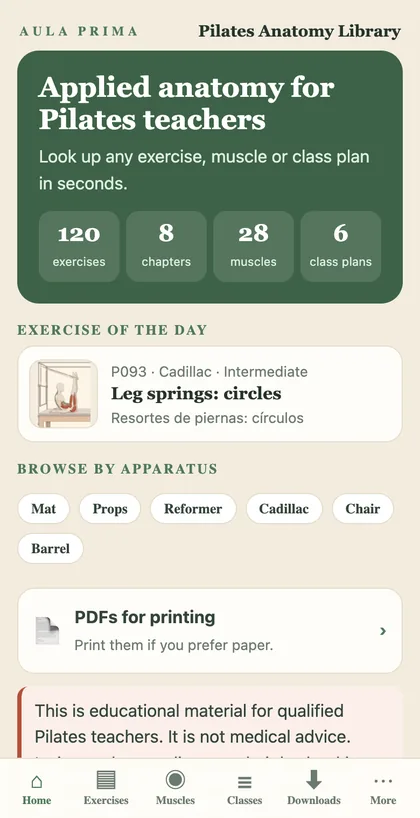
Search any exercise or muscle in seconds, follow the class plans and open every PDF from your phone. It also holds all the PDFs, so you can print whichever you prefer on paper.

One-time payment in USD · Credit and debit cards · Secure checkout
Open the books, look for the exercises you teach and use them in a real class. If it is not what you expected, write to us within 7 days and we refund your payment. No questions asked.
For Pilates teachers, teachers in training and experienced practitioners who want to understand the anatomy behind each exercise. It is written to be used when you prepare and when you teach.
It does not belong to any one school or brand. It uses well-known exercises with their usual names, shown in English and Spanish. “Pilates” is used here as the generic name of the discipline.
Yes. Volume 1 covers foundations with 14 exercises, and every exercise states its level so you can build progressively.
No. It is educational material that complements your training. It is not medical advice and it does not replace a qualified teacher or a health professional.
11 PDF files (the 8 volumes, the Atlas, the Class Design and a start guide) in A4 size, plus a companion app with search. Print what you need or use it from your phone.
Right after payment you get access to the app and all the files by email. Nothing is shipped.
Write to us within 7 days of purchase and we refund your payment, no questions asked.
No. The illustrations were generated with artificial intelligence and then reviewed. They are didactic drawings, not photographs of real people. What you receive (the 120 exercises, the Atlas, the Class Design and the app) is the complete material described here.
Aula Prima makes reference libraries for practical subjects, one subject at a time. After art and yoga, Pilates.
We use your email only to deliver your purchase and to answer support requests. Payments are processed by our checkout provider; we never see or store your card details. We use advertising and analytics cookies to measure our ads.
The Pilates Anatomy Library is a digital product for personal use in your own classes. You may print it and share access to the app with your own students. You may not resell or publish the files. The content is educational material and is not medical advice.
You have 7 days from purchase to ask for a full refund. Write to us at the support address and we will refund the payment to the original method.
Support: support email coming soon